Summary
Mimmo Peruffo and Daniela Gaidano recount the origin of their field research, begun in 2006 with an interview with the master stringmaker Astro Di Russo at Acerra. The encounter reveals a direct witness to the historic production cycle, still able to describe gestures, tools and craft terms ("tempra", "scodelle", "pirone", "cannucce") that match 18th-century documents. Realising that the historical method was disappearing with the last elderly craftsmen, the authors concentrated their investigation in the Abruzzese villages of Salle, Musellaro and Bolognano, the last area in which a living memory of the tradition could still be traced.
Key takeaways
- The research began in 2006 with the meeting of stringmaker Astro Di Russo, heir of the Neapolitan-Abruzzese tradition.
- Di Russo still used the technical jargon of the 18th century (tempra, scodelle, pirone, cannucce) and remembered the practical gestures of manual processing.
- The standardised "historical method" of the 17th century practically disappeared between the two world wars with the arrival of German and French industrial techniques.
- The introduction of metal strings (1920) and nylon (post-war) put a definitive end to the historical artisan chain.
- Salle, Musellaro and Bolognano proved to be the last area where the living memory of the historical procedure was still recoverable.
The reasons of our research
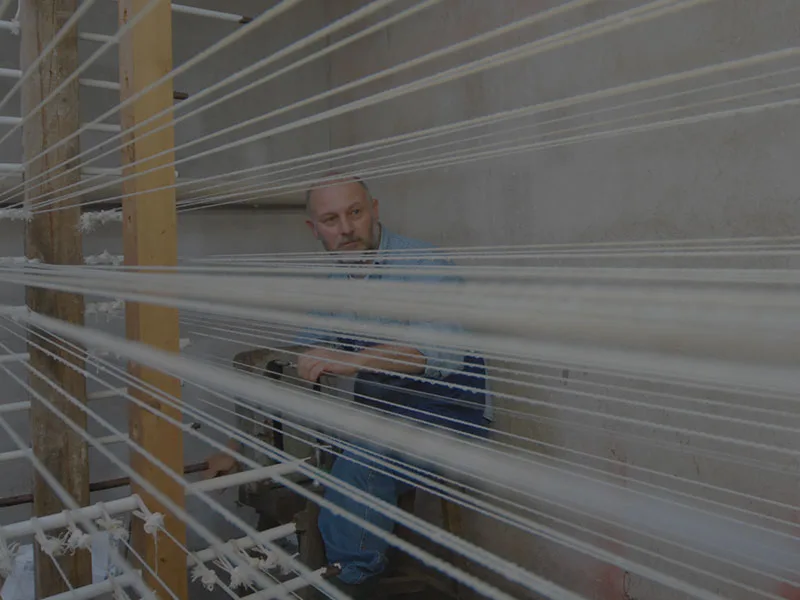
The research we are going to present started almost unconsciously in the autumn of 2006, when we went to Acerra (Naples) to interview one of the last elderly Abruzzese stringmakers, heir to the tradition of his father who had worked in Naples. Our intention was to gather general information about the history of Italian stringmakers.
After a few exchanges we realised that we were face to face with a direct witness of the historic production cycle as it had been practised since the late 16th century and up to at least the late 1970s of the 20th century: it was in that period, in fact, that the last Abruzzese stringmaker stopped making gut strings following the historical procedure handed down for generations (Roberto D'Orazio of Salle).
Mr Astro Di Russo, though with some understandable gaps in memory, at a certain point began to use a jargon familiar to us that referred directly to the distant past, to 18th-century documents. He still called by the term "tempra" (tempering) the alkaline solution of potassium carbonate, "scodelle" (bowls) the earthenware containers for the gut, "pirone" the wooden peg to which the gut strands are fastened on the frame after twisting, "cannucce" (straws) the marsh-reed halves used for degreasing, and so on.
But what seemed far more interesting was the fact that he was able to describe in practice what he had done as a boy of eight years old (and onward) in his father's stringmaking shop. A truly fascinating world was opening up.
|
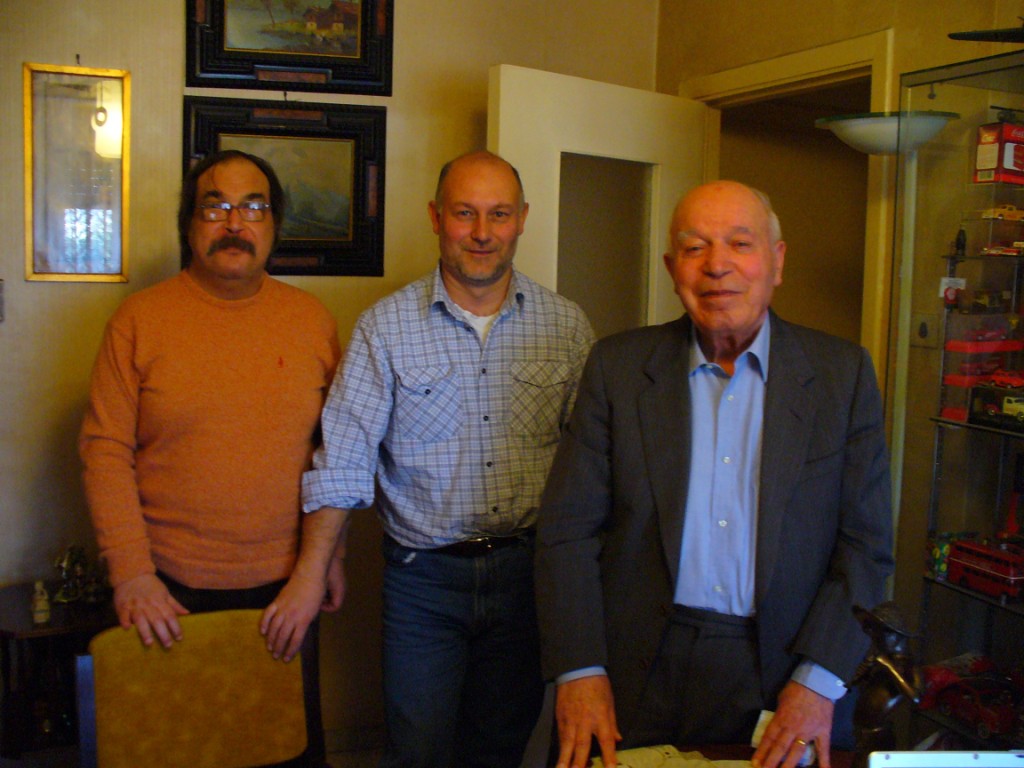
The master stringmaker Astro Di Russo |
…with his son Nicola |

The limits of written documents
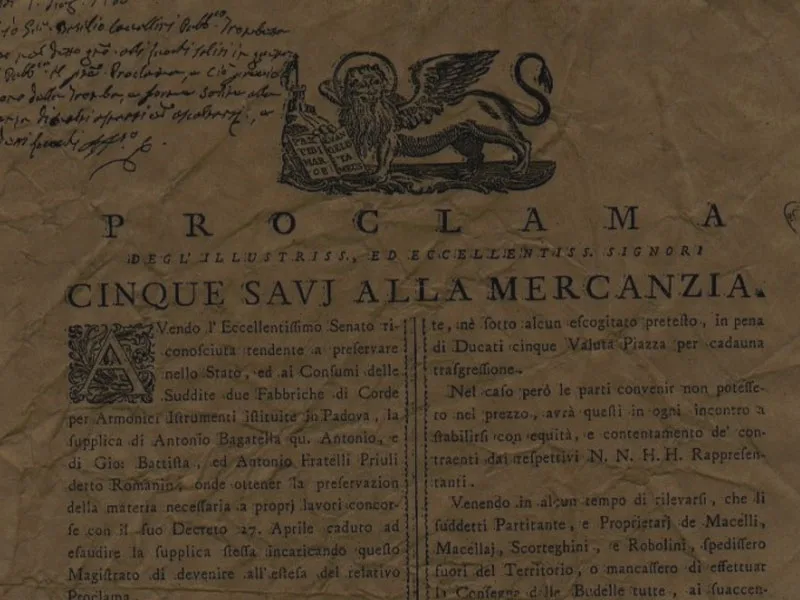
Until then, the only way to try to reconstruct the historic production cycle had been based solely on written documents. The limitation of such a source in the field of craftsmanship is evident: the world is full, for example, of books that explain how to French-polish a piece of furniture with shellac, but from there to actually knowing how to do it the road is very long, not to say impossible. For example, ancient documents describe the so-called "passing through the thimble" of the gut. How the manual gesture was actually performed remained a mystery, as did how the thimble itself was made, and so on for all remaining construction phases. Until our meeting with Mr Di Russo.
Why is it so important to know the historical stringmaking process?
A brief digression is in order: today no one is able to produce gut strings respecting all the historic stages (the examination of documents and their subsequent comparison has led to the conclusion that the way of making gut strings, from the mid-17th century onward, followed a highly standardised procedure, which we call the "Historical Method").
The rise of the industrial method between the two wars
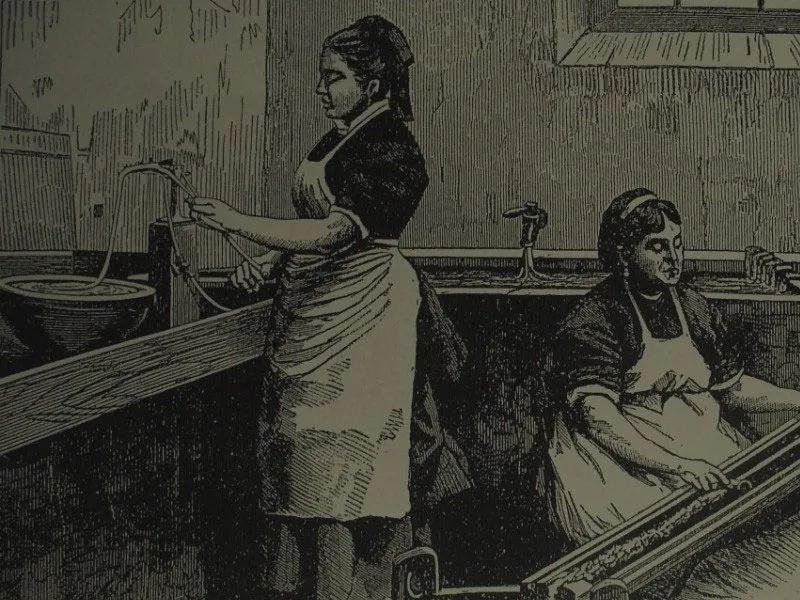
This is because, between the two world wars, an industrial method of gut processing emerged (introduced first by the Germans, then followed by the French) which considerably lowered production costs and the heavy uncertainties about final quality. One can see what an incredible advantage this was for those who had to produce strings: an entire month of heavy manual work spent constantly amid putrid smells and arduous labour was replaced by a stringmaking process based on smoothing machines, alkaline solutions of pure chemical reagents instead of the usual vine-ash dispersed in water (liscivio) and so on.
The introduction of metal strings for bowed instruments (from 1920 onward) and of nylon for plucked instruments (from the post-war period) was the final blow to the production of gut musical strings. After the Second World War the industrial technique of processing gut strands nevertheless served excellently for harp strings, surgical sutures and tennis strings. It was also the same technique that allowed the revival of early music.
What was lost
But at this point practically nothing of the historical method survived — both because the typical past awareness of how to distinguish a good string from a bad one was lost (strings are now made to be perfectly smooth and rigid, almost like polished steel wire, and machine-finished without any quality criterion), and because there was no point for stringmakers of that time to use an obsolete, long and costly methodology: once the car has been invented, what is the point of still going by horse?
The modern way of making gut strings thus quickly took over everywhere: most operators bought gut from butchers already cleaned, separated from unnecessary membranes, cut into strips and stored in salt. In practice, a good 50% of the historic phase was eliminated; the rest (manual polishing) was replaced by fast and accurate sanding machines. A production cycle that required at least ten specialised professional figures was now reduced to only two: one preparing the strings for twisting and one in charge of the final polishing. A single company could now produce a few million surgical threads per year and tens of thousands of musical strings at significantly reduced cost, above all for the end user.
Where to look for the last witnesses
The conclusion was that already around 1970 no one was any longer able to reconstruct (or even remember) all the manufacturing stages typical of the past. Something seemed definitively lost for ever — until our meeting in 2006, after which we soon reached several conclusions:
- Perhaps it is not true that we have come too late to save the historic production cycle: perhaps a few more elderly stringmakers still exist who, in their youth, made musical strings according to the historical criterion.
- If point 1 is true, we must move quickly before the last elderly heirs of the stringmaking craft disappear altogether.
After exchanging views with Astro's son Nicola, we concluded that on the entire Italian peninsula only a small territorial area remained where something of the ancient tradition might still be remembered: Abruzzo, and precisely the villages of Salle, Musellaro and Bolognano. There we focused our efforts, hoping not to have come too late.
We were lucky.
Mimmo Peruffo & Daniela Gaidano, 2010