
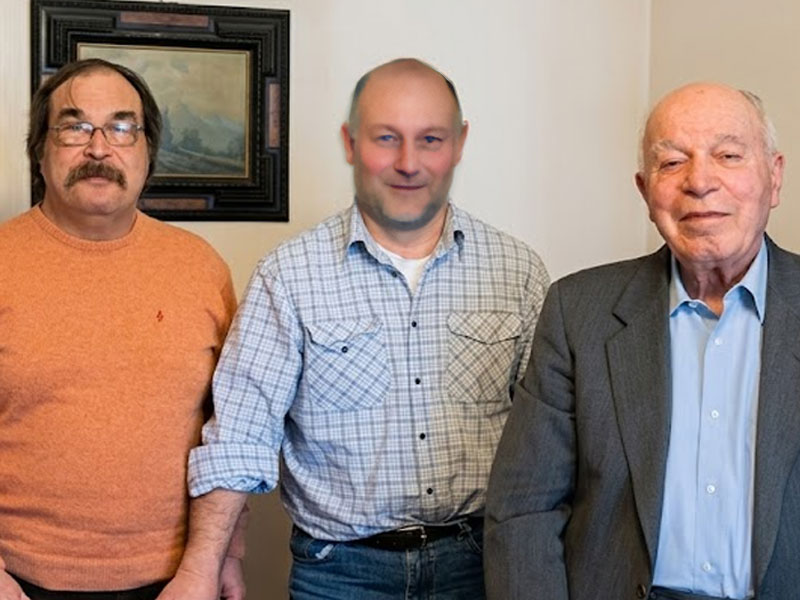
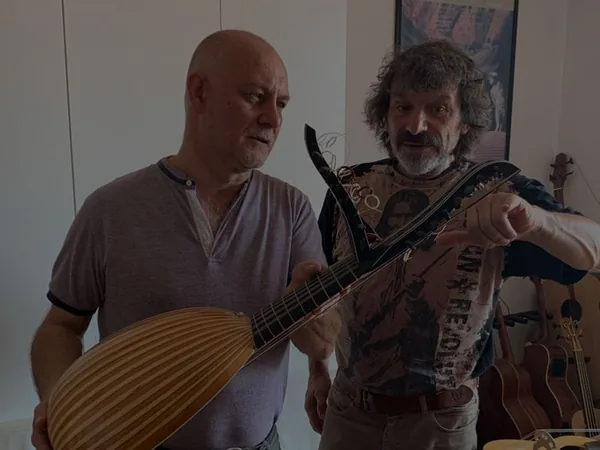
The strings of Raphael Mëst's lute in Linköping
Mimmo Peruffo recounts the discovery and study of the surviving demifilée bass-string fragments on Raphael Mëst’s Baroque lute in Linköping, and the faithful copy donated to the Swedish library.
Field research by Mimmo Peruffo and Daniela Gaidano (2006-2010) among the last Abruzzo stringmakers of Salle, Musellaro and Bolognano to save the historical method.
Read the essay →Aquila Corde Armoniche: a section dedicated to historical and scientific research on gut, silk and natural material strings.
Essays and articles on the history, technique and science of harmonic strings.
Explore →Catalogue of antique strings preserved in leading European museums.
Explore →Research on the Italian districts of gut harmonic string production.
Explore →Special projects in reconstruction and experimentation on historical strings.
Explore →Mimmo Peruffo recounts the discovery and study of the surviving demifilée bass-string fragments on Raphael Mëst’s Baroque lute in Linköping, and the faithful copy donated to the Swedish library.
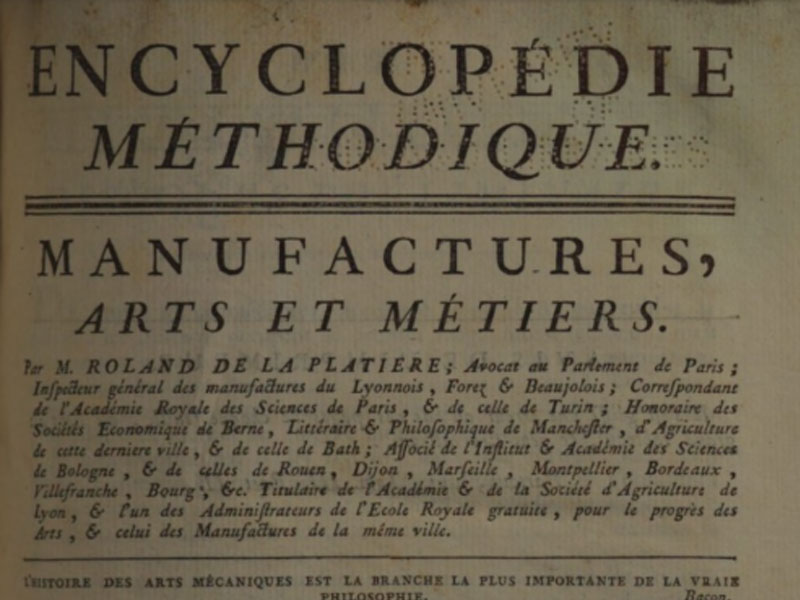
A short update note by Mimmo Peruffo on lute top gut strings: historical sources on Rome and Munich, breaking load, and a new generation of strings with a breaking index of 310-320 Hz · m.
Mimmo Peruffo’s 1997 Orfeo essay on gut-string manufacture from the Middle Ages to the eighteenth century: the four technological ages, from loaded gut to wound basses, and the philological problem of modern strings in early repertoire.
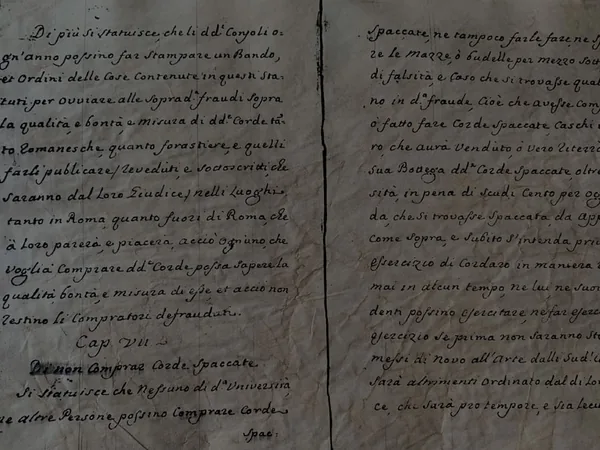
Mimmo Peruffo's essay on the gut-stringmakers of Naples and Abruzzo, alongside Rome and Padua, between the 18th and 19th centuries: historical manufacturing technique, production centres, quality criteria and string gauges.
| 01 | Brussels | Brussels (Musical Instruments Museum) | details → |
| 02 | Innsbruck | Innsbruck (Ferdinandeum Museum) | details → |
| 03 | Nuremberg | Nuremberg (Germanisches Nationalmuseum) | details → |
| 04 | Oxford | Oxford (Ashmolean Museum) | details → |
| 05 | Kremsmünster | Kremsmünster (monastery near Linz, Austria) | details → |
| 06 | London | London (Victoria & Albert Museum) | details → |
| 07 | Vienna | Vienna (Kunsthistorisches Museum) | details → |
| 08 | Rome | Rome (National Museum of Musical Instruments) | details → |
“Rediscovering historical strings is not nostalgia for the past, but the key to understanding the sound that composers had in mind.”