Summary
Synthesis of Mimmo Peruffo’s lute-string research begun in the 1980s. The author divides the lute’s organological history into three ages linked to stringmaking technology, describes the three Sorts (Trebles, Meanes, Basses) and shows that each requires a specific manufacturing technology. Bridge-hole measurements on some 60 European historical lutes lead to the conclusion that 16th- and 17th-century basses (Catlines, Lyons, Pistoys) were made of weighted gut — with cinnabar, litharge or copper powders — to reach a specific weight at least twice that of natural gut. The demi-filée strings of 18th-century German 13-course D-minor lutes are not “transition strings” but a technological workaround for the impossibility of producing metal wires thinner than 0.12 mm.
Key takeaways
- The lute must be designed from the strings: maximum vibrating length on the first string, working index 230 Hz · m (2–3-semitone margin from breaking).
- Three Sorts of string: Trebles (high strength, low twist, alum); Meanes (maximum elasticity, high twist, possibly rope-twist); Basses (weighted gut).
- Bridge-hole diameters on c. 60 historical lutes are too narrow for plain-gut strings: conclusion = weighted basses with mercury, lead or copper-powder compounds.
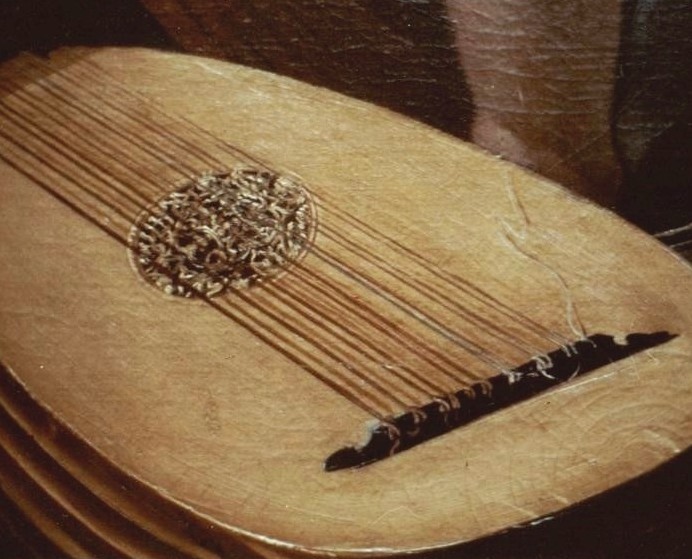
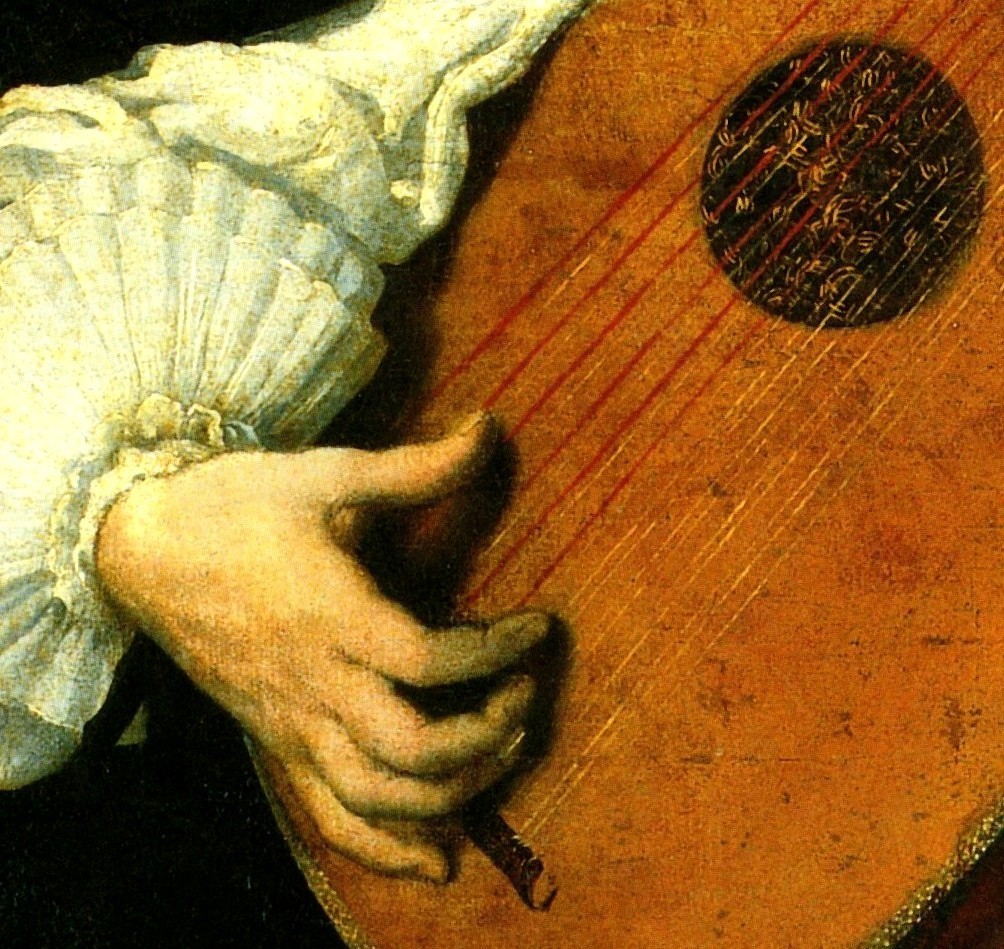
- 17th-century iconography: basses are always deep red, brown or near-black (Mace’s
deep dark red colour
Pistoys), exactly where today wound strings are used. - Demi-filée on 18th-century German 13-course D-minor lutes compensate for the impossibility of metal wires below 0.12 mm.
- 13-course lute with swan-neck extension: extension limited to 95–100 cm because only within that range can the same wound strings used on the fingerboard basses be employed.
“Now divine aire, now is his soule ravisht, is it not strange that sheepes guts should hale soules out of mens bodies?” — William Shakespeare, Much Ado about Nothing
Foreword
The present work is the synthesis of a research (we might call it historical-archaeological) that began in the 1980s. A synthesis we still have to consider as provisional, since liable to be expanded or modified after possible new discoveries or further reasoning on the subject of stringing the lute in its several historical seasons. For each historical period of the lute I listed the diverse, concomitant historical evidence I have knowledge of (treatises, technological, epistolary and iconographical sources), to which are added mathematical verification and experimental tests. The conclusive hypothesis is expressed at the end as a harmonised synthesis of all sources. Where different points of view exist, I expose them together with their reasons, pointing out their weak points.
My profession as stringmaker plays here a fundamental role: the fact of never having seen and handled fresh gut strongly limits the very formulation of hypotheses. So a long and thorough study was necessary of the 16th–17th-century technologies (especially dyeing of leather, fabrics, silk and metal wire), supported by Franco Brunello. From 1983 to 1990 I carried out at least 1,500 tests after ancient recipes from dyeing and tanning trades, hoping to apply them to gut loading. Research in European museums (Vienna, Nuremberg, Paris, Florence, Rome, Brussels, Innsbruck, Berlin) measuring bridge-hole diameters on surviving lutes finally closed the circle. To these is added the surviving fragments of historical strings in some European museums, on which I keep a constantly updated database. Filmed interviews with the last elderly Italian stringmakers, heirs of a tradition passed from father to son, secured the disappearing knowledge just in time.
A word on the lute, "perfectissimo et eccellentissimo" instrument
The lute is the instrument in which old luthiers and stringmakers spent every resource to obtain the maximum acoustic yield in the string-instrument interface. Low working tensions, sound from a single finger impulse, and the wide frequency range between first and last open strings (especially on 10- or 11-course versions) made it a gym of design and craftsmanship. Old luthiers built instruments starting from the mechanical and acoustic properties of available strings, not the other way around.
Three design criteria
- Working tension: the gauge was chosen so the string was neither too tight nor too loose.
- Equal feeling: the same tactile tension across all strings.
- Inharmonicity of large strings: larger gauge means worse acoustic yield.
Solutions to reduce diameter at the same frequency: 1) lower tension; 2) longer vibrating length; 3) higher elasticity; 4) higher density. Point 1 is up to the player, 3 and 4 to the stringmaker, point 2 to the luthier.
Upper limit: breaking frequency
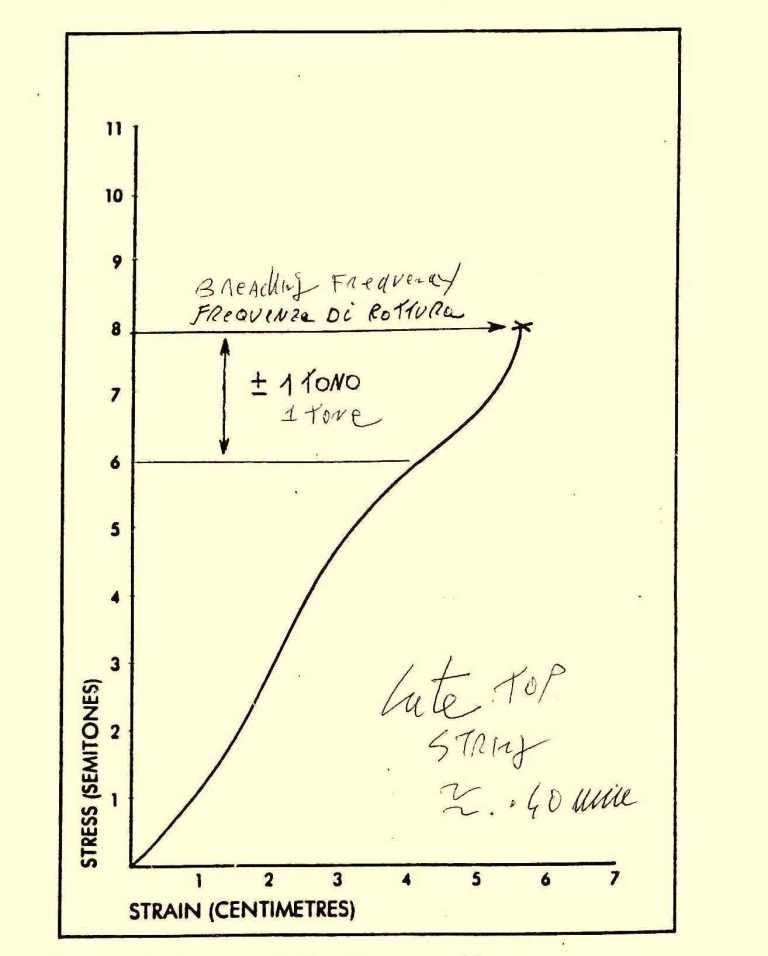
A gut string at 1 m vibrating length breaks at about 260 Hz (mean load 34 kg/mm²). The breaking frequency is independent of diameter; only the tension changes. The product of vibrating length and breaking frequency is the breaking index = 260 Hz · m. A luthier reverses the formula: for a lute in G (392 Hz at 440 Hz pitch), 260/392 = 0.66 m.
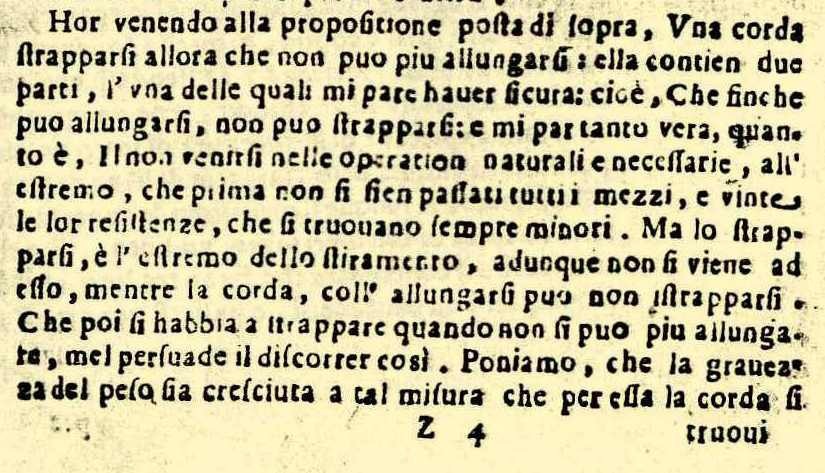
The safety margin from the limit is 2–3 semitones. Gut’s stress-strain curve (van Edwards 1985) shows linearity up to 2–3 semitones from the breaking point; beyond, the string rapidly loses stretching ability. Bartoli (1679): a string breaks when it cannot stretch further
. Hence the Renaissance rule of tuning the first string to the highest possible note: work at 90–95% of the tensile reserve.
Strings and their names
Period strings were named after their origin. Guilds prosecuted fraud severely. Production specialised: Florence for basses, Rome for first strings.
- 1517 (Capirola): Munich strings and “Ganzer”.
- 1574 (Le Roy): the best from Munich or L’Aquila.
- 1610 (Dowland): Trebles from Rome, Munich (Monnekin), Mildorpe; Meanes = Gansars; Basses from Nuremberg, Strasbourg; Venice Catlines (the best, from Bologna).
- 1670 (Burwell): the best from Rome; bass strings and octaves from Lyon.
- 1676 (Mace): Trebles = Minikins; Meanes = Venice Catlins; Basses = Pistoys, Lyons.
- 1690 (Talbot): Romans, Venice Catlines, Lyons for violin and bass-violin.
- 18th century: these names disappear; replaced by generic origin descriptions. Bass strings are now made by luthiers.
The three Sorts and their meaning
The purpose of the three Sorts was a “relay” from treble to bass: each type had to solve the mechanical/acoustic problems of the previous one. Dowland (1610) warned that Gansars (Meanes) could not be used as Trebles: they would break. Mace confirmed: Minikins (Trebles) were so strong they couldn’t be broken even with the hands, leaving marks on the fingers; the much thicker Catlines could only be broken by a particularly strong man.
Trebles
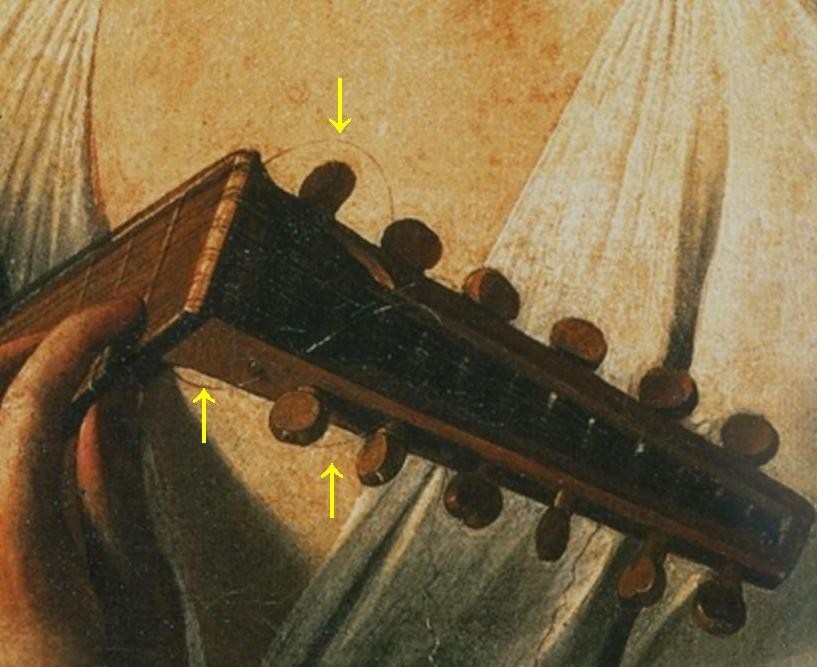
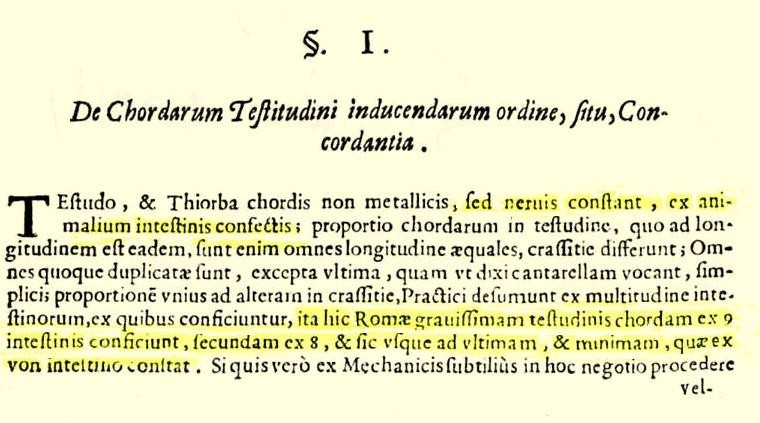
Maximum tensile resistance and surface wear, sacrificing elasticity. Dowland: a good treble is stiff and sharp at the thumb. Baron (1727): Roman trebles could last up to 4 weeks. Late-16th-century documents speak of “reinforced” trebles, probably with chemical treatments hardening the gut, in low twist. For trebles, one lamb gut (Kircher 1650): raw diameter c. 0.45–0.48 mm. For 2nd and 3rd courses, more twist, no chemical reinforcement.
Meanes
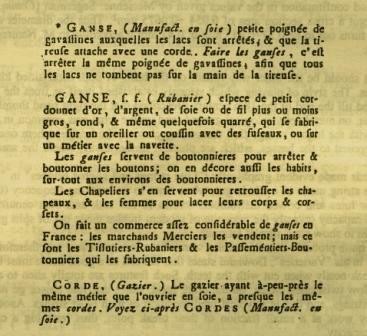
As diameter grows the string loses acoustic yield through inharmonicity. Middle strings need maximum elasticity: treatments on fresh gut to reduce stiffness; complex twisting (rope, on fresh gut). The etymology of “Ganzer / Gansars” may refer to French Ganses, Ganzier, garment cords with rope structure.
Basses
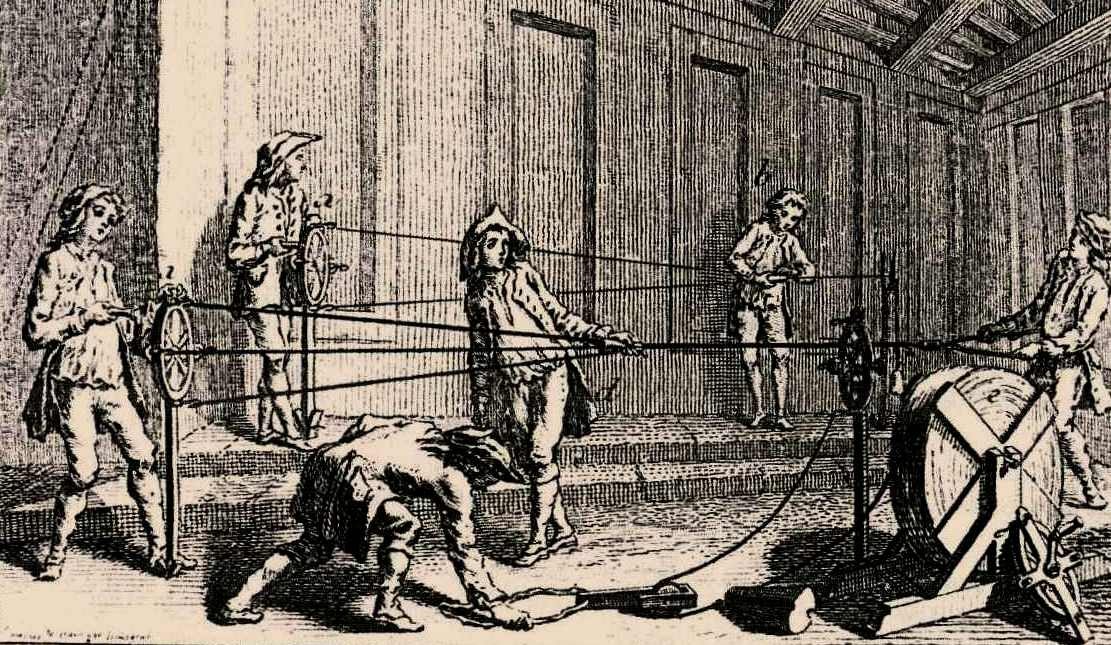
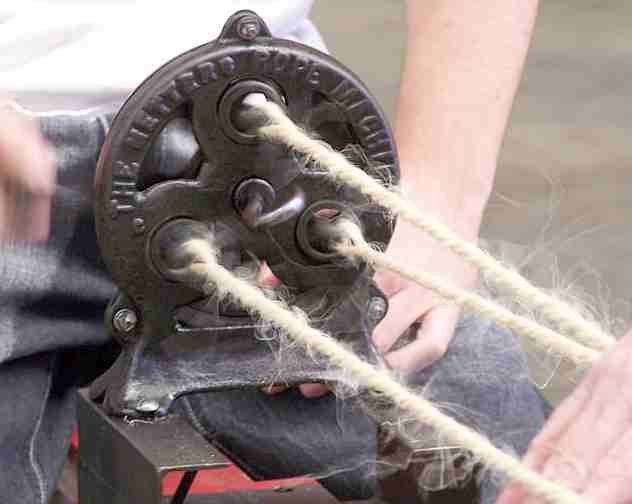
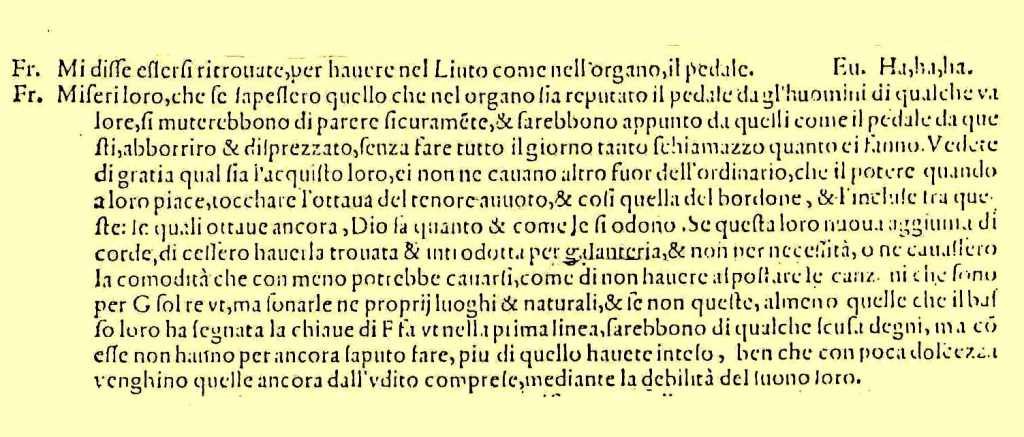
Six-course lutes up to c. 1570: documents (Barbieri 2006) show rope-twist strings were in use from the late 15th century (Ugolino da Orvieto 1430–40; orditori in mid-16th-century Roman workshops). Basses needed high elasticity to avoid pitch distortion in octave courses: rope construction ensures it. The 6th course was added thanks to such rope strings.
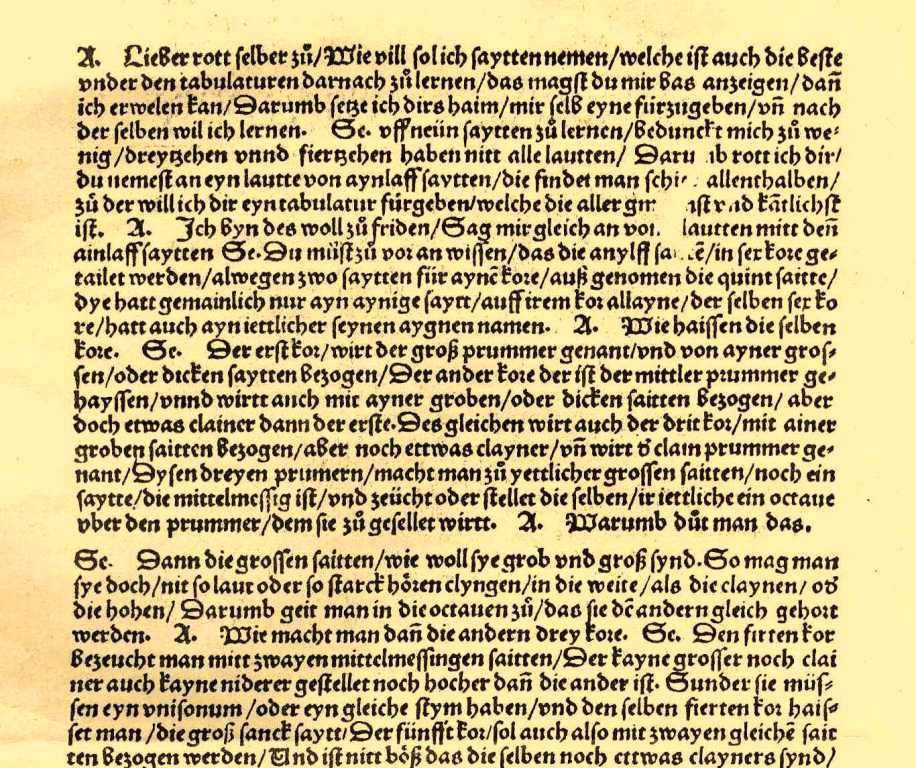
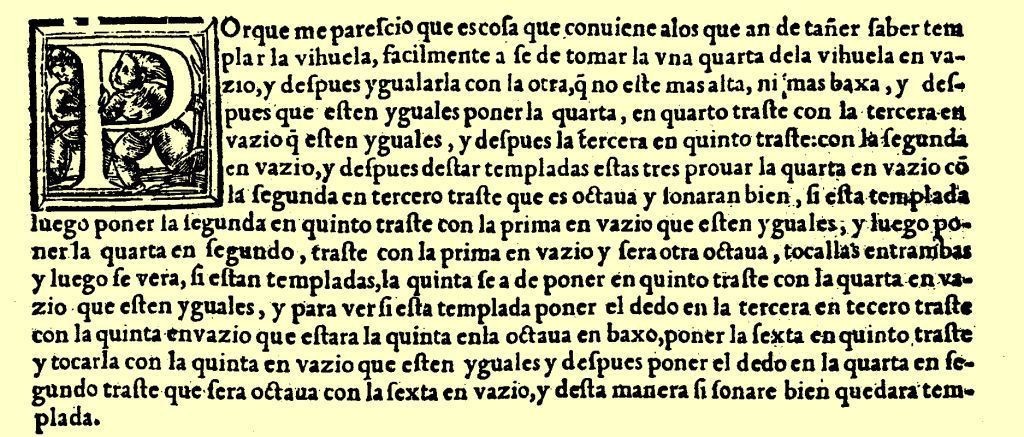
Vihuela: the all-unison setup is not sustainable. Bermudo (1555) compares the guitar’s 4th with the lute / Vihuela of Flanders: indicates unison on the Vihuela. Pisador (1552) specifies unison on the 4th, implying the standard was octave (at least for 5th and 6th). The 6th must have been octave for acoustic reasons.
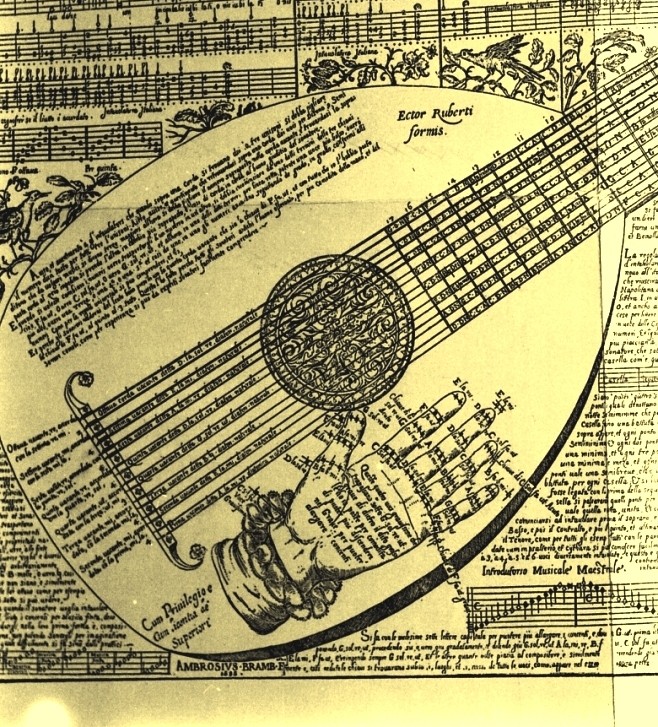
Lutes after 1570 (7–11 courses without extension): Le Roy (1574) cites the addition of a 7th bass a fourth/fifth below the 6th. Galilei (Florence 1568) still complains of weak basses; but the 1585 Carrara catalogue already lists an 8-course lute. Production centre: Florence-Bologna (cf. Michelangelo Galilei 1617, Ferrara 1587–97).
Clues on bass weighting
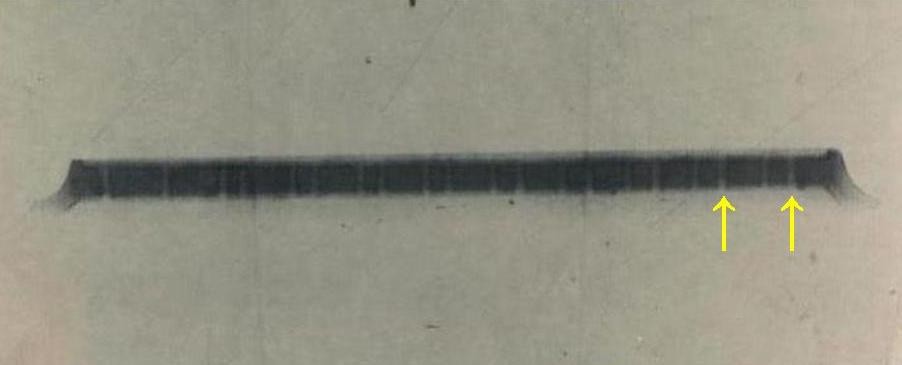
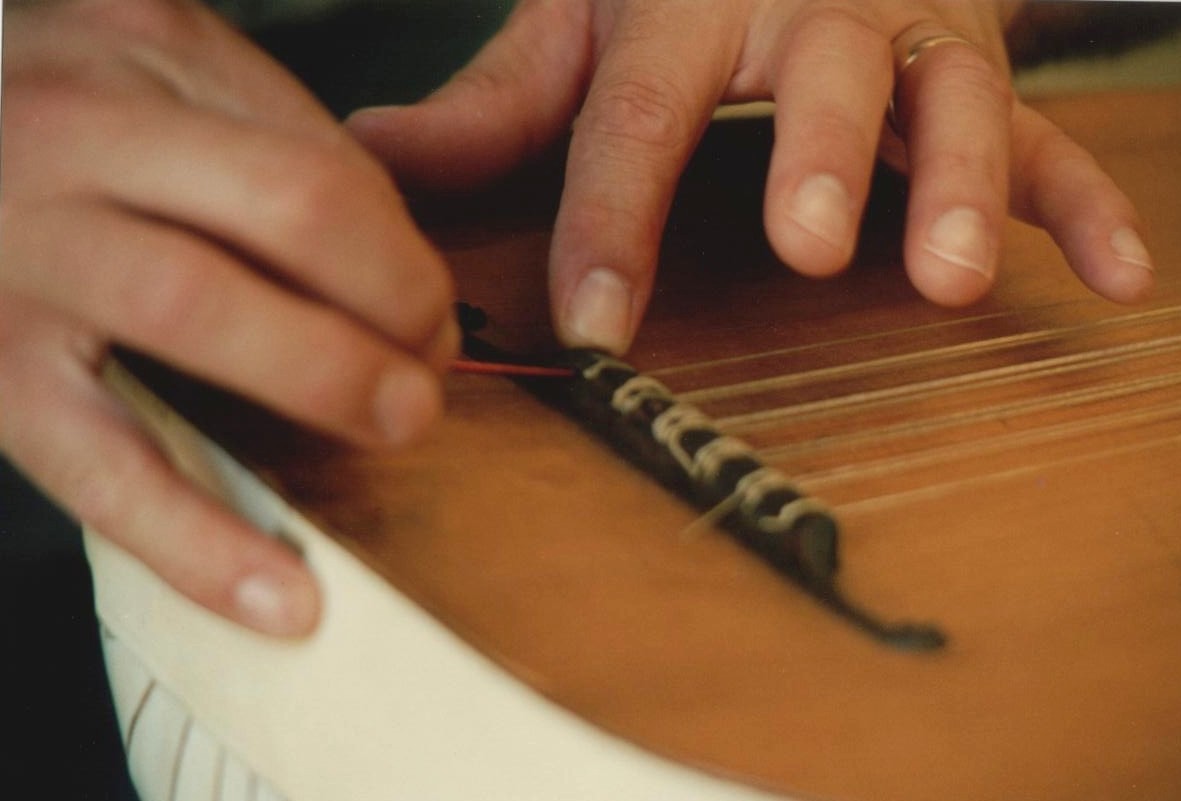
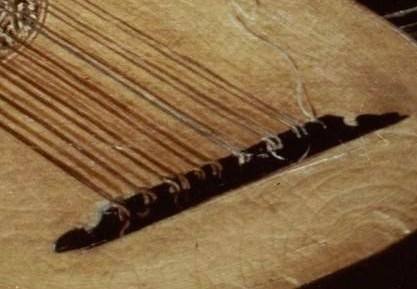
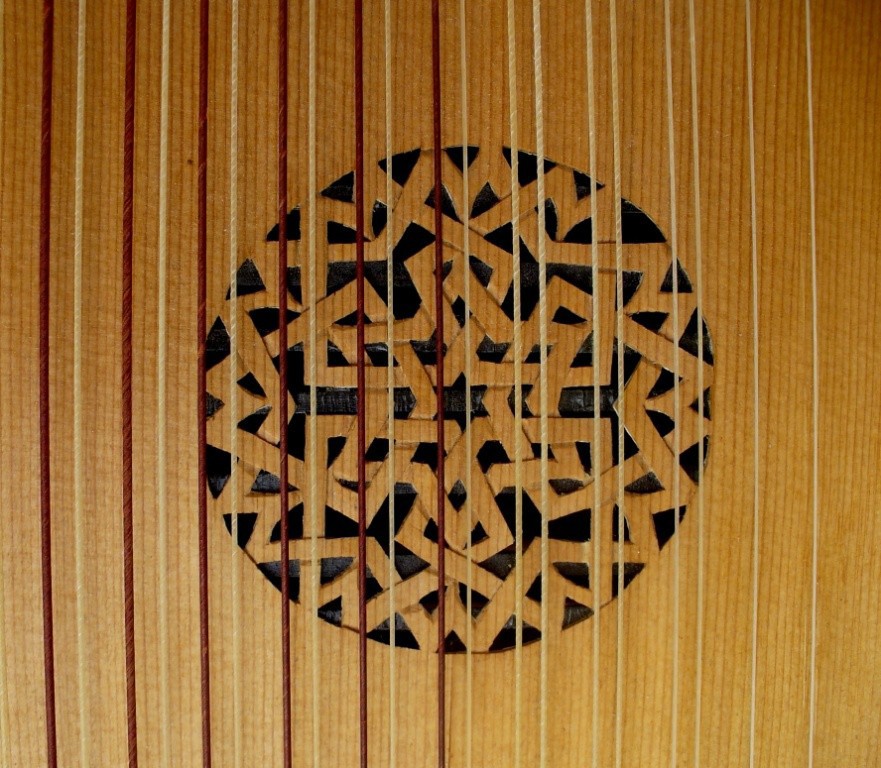
- Bridge-hole diameters: survey on c. 60 historical lutes. Half considered original. With rope-twist strings (density 1.10–1.20 g/cm³, diameter drop under load 13–10%), real tensions are 0.9–1.2 kg per string — equivalent to a modern lute at 3 kg tuned 10–11 semitones lower. Unacceptable.
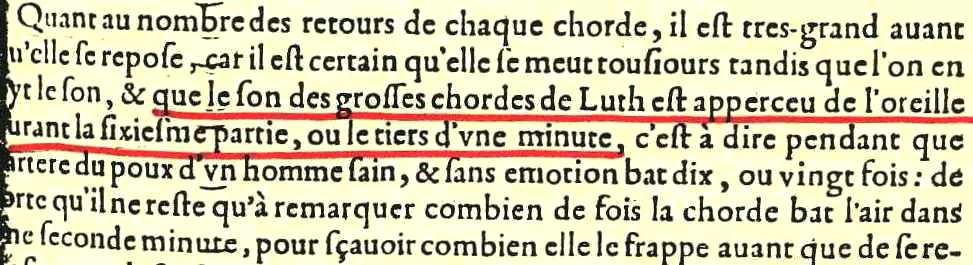
- Bass acoustic exuberance in the 17th century: Burwell Lute Tutor (c. 1670) and Mace complain of
the confusion that the length of sound produce
of basses on short-extension lutes: only very efficient basses can cause such confusion. - Mersenne (1636): the 11th bass of the lute rings for up to 20 seconds.
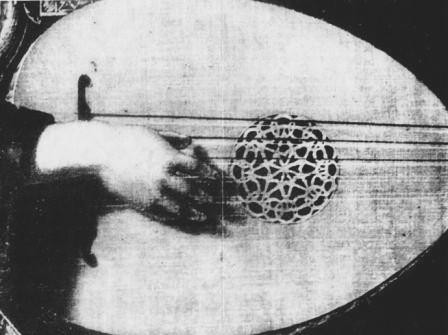
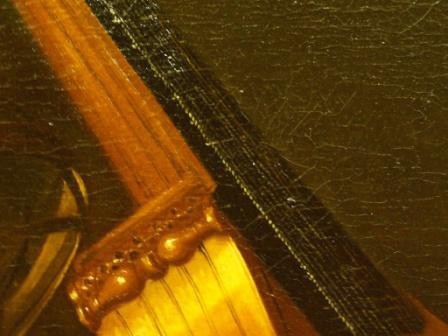
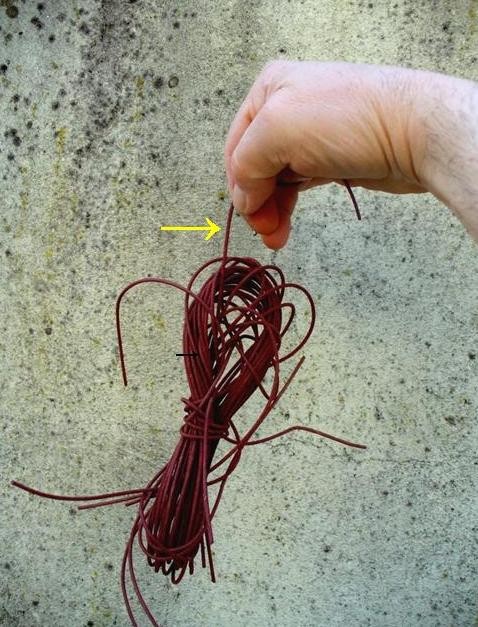
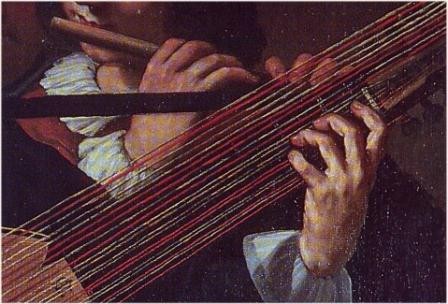
- Iconography: basses always with reduced diameters, uniform colour (deep red, brown or near-black), with abrupt transition from yellow trebles, exactly where today wound strings are needed.
- Dowland 1610: prescribes unison on the 6th course, evidence of acoustically excellent basses with low inharmonicity.
- Mace 1676: Pistoys
dyed in a deep dark red colour
. - Smooth surface: Talbot (1694) describes Lyons as
finest & smoothest
; Burwell describes Romans and Lyons smooth,free from knottes and rugged
; Mace says thinner Venice Catlines are smooth and Pistoys are large Catlines. Conclusion: Venice Catlines, Lyons and Pistoys had smooth, not rope-like surface.



Our hypothesis
Only weighting of gut (at least doubling its weight) on a smooth rope-twist core satisfies all conditions: reduced diameter at equal tension; smooth surface; less inharmonicity; remarkable acoustic yield; flexibility to be wound into a bundle. Doubling is needed because the acoustic limit (largest acceptable diameter) coincides with the 6th course of the six-course lute: adding lower courses without exceeding that diameter is only possible by weighting.
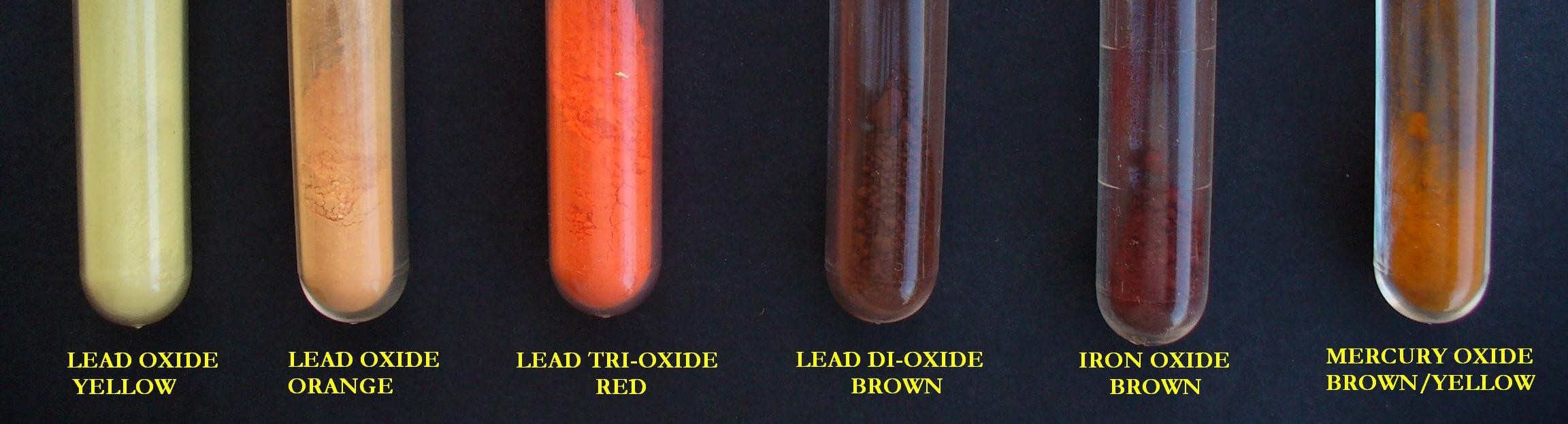
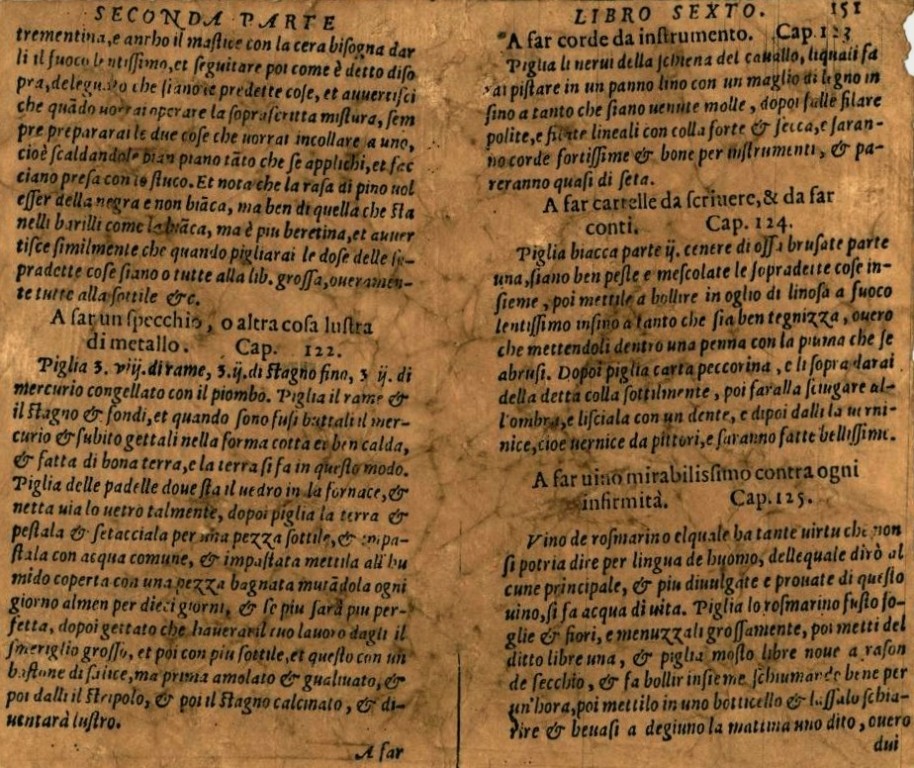
Pigments used: cinnabar (red mercury sulphide), litharge (yellow lead oxide), minium (red lead oxide), copper powders (we use it today for non-toxicity). All period recipes (Don Alessio Piemontese 1555, Rossello 1575, Rossetti 1568) for wax, silk, leather use Cinnabar and Litharge powders. Only heavy (> 8–9 g/cm³) insoluble compounds work: no greens, blues or pinks. 40–50% of the volume of a 2.1×-loaded string is occupied by the powder.
Counter-hypotheses and our replies
1. Light transparency (Dowland): the passage greater strings though they be ould are better… they will be cleere against the light
refers to Meanes, not Basses. Even if it referred to basses, it only applies to those described in the Varietie, not to Pistoys and Lyons (which Mace describes).
2. Mersenne’s diameters (1636): he uses the lute as a theoretical example to show frequency-diameter proportionality at constant tension. Extrapolating, the first string would be 0.34 mm (impossible from one lamb gut); the 11th bass = 2.3 mm would need a 2.7 mm hole (not found in surviving lutes). Mersenne himself makes major errors on breaking loads (lute first string 19 kg/mm² vs real 36); he admits no musician followed his theory.
3. Rope-twist on the bridge by the player: requires undocumented extra work, complex knots never seen in iconography, rope surface contrary to sources.
4. Aesthetic dyeing: Dowland/Mace prescribe delicate colours (red, green, blue) variable on the strings; iconography shows only deep red/brown/near-black/yellow, uniform, on basses alone, just where wound strings are needed today. No analogy with aesthetic dyeing.
Archlutes, theorbos and German D-minor lutes with extension
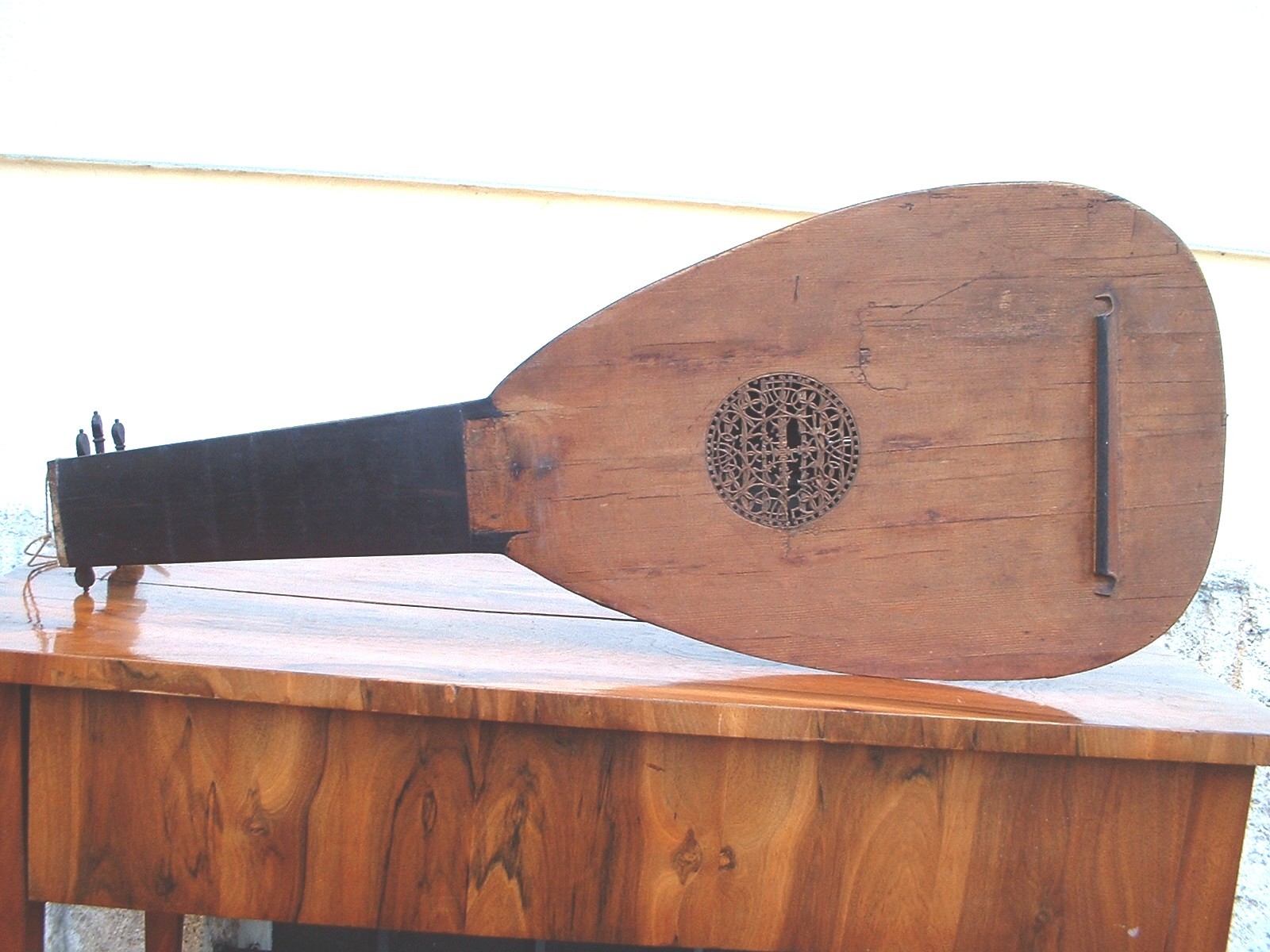
Theorboes/archlutes with long extensions and single basses: bridge holes (Diefopruchara, Vendelio Venere, Buechenberg, Taus) measure 1.3–1.9 mm. The product frequency×vibrating length of the 14th bass is similar to that of the 6th course of a six-course lute: same acoustic-quality index. Natural-density gut basses (Venice or high twist), no weighting.
Archlutes and D-minor lutes with short extension and octave courses: no source; the octaves compensate for the loss of acoustic yield. Unweighted basses up to 1.40 mm.
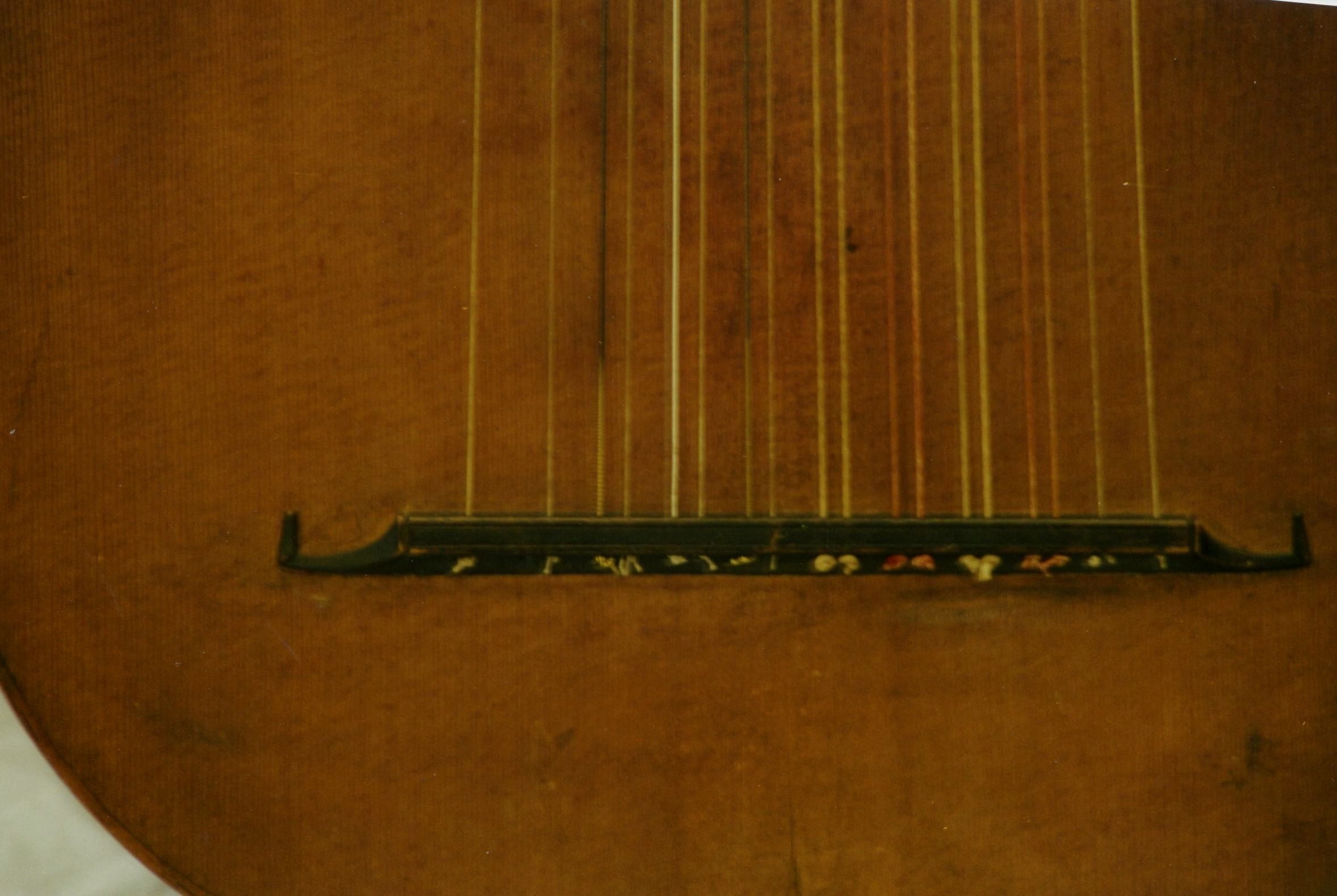
Basses in the 18th century: the German 13-course D-minor lute
The 17th-century lute generally did not benefit from wound strings (Mace 1676, Talbot 1690). The earliest mention is 1659 (Hartlib on Goretsky); Playford 1664. In 1731 G.B. Martini reports keyboard instruments with copper strings like the lute
. Three 18th-century types: 1) double-wound; 2) close-wound; 3) demi-filée (open-wound).
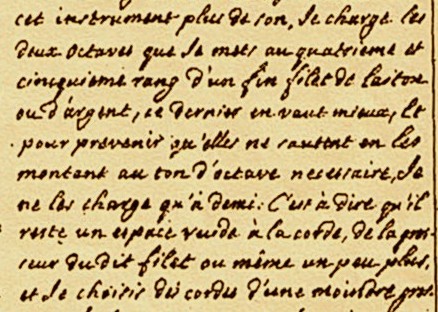
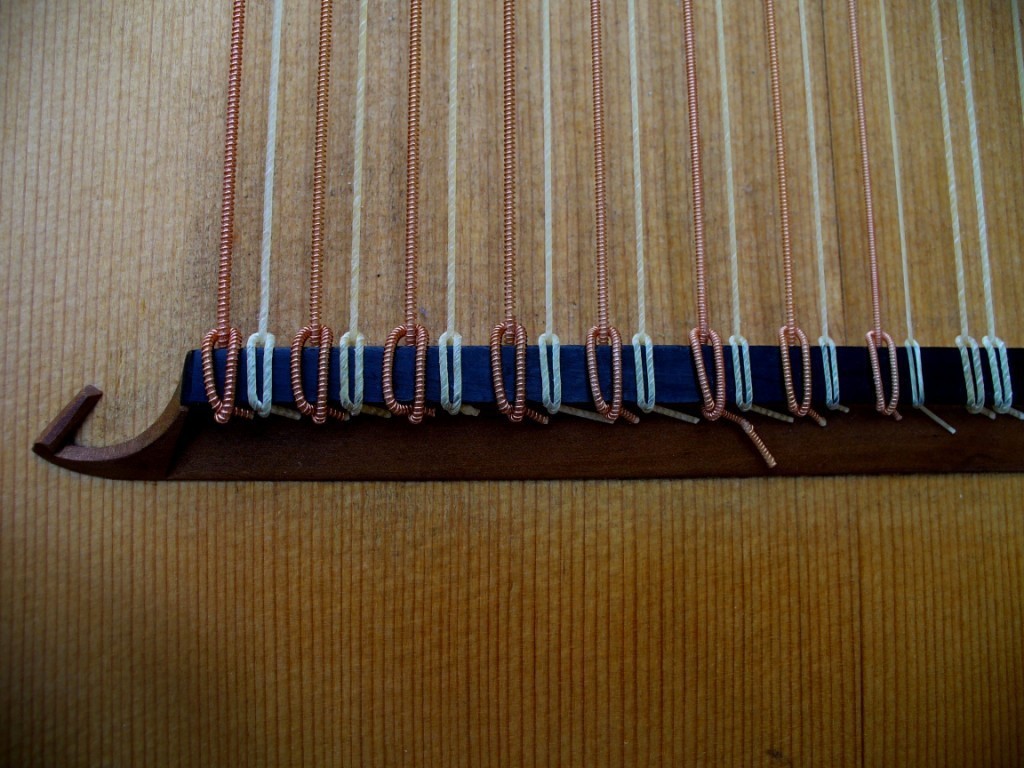
Our choice: demi-filée. At the time (Grassineau 1740, Cryseliuse and Nuremberg gauges) commercial metal wires did not go below 0.12 mm; close-wound for the D-minor lute basses needed thinner wires. The demi-filée (spacing equal to wire diameter, Le Cocq 1724) bypasses the technological limit. They are not “transition strings”.
Evidence
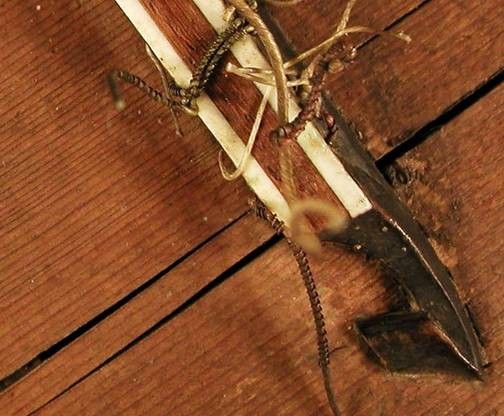
- Direct: demi-filée fragments on a Raphael Mest lute.
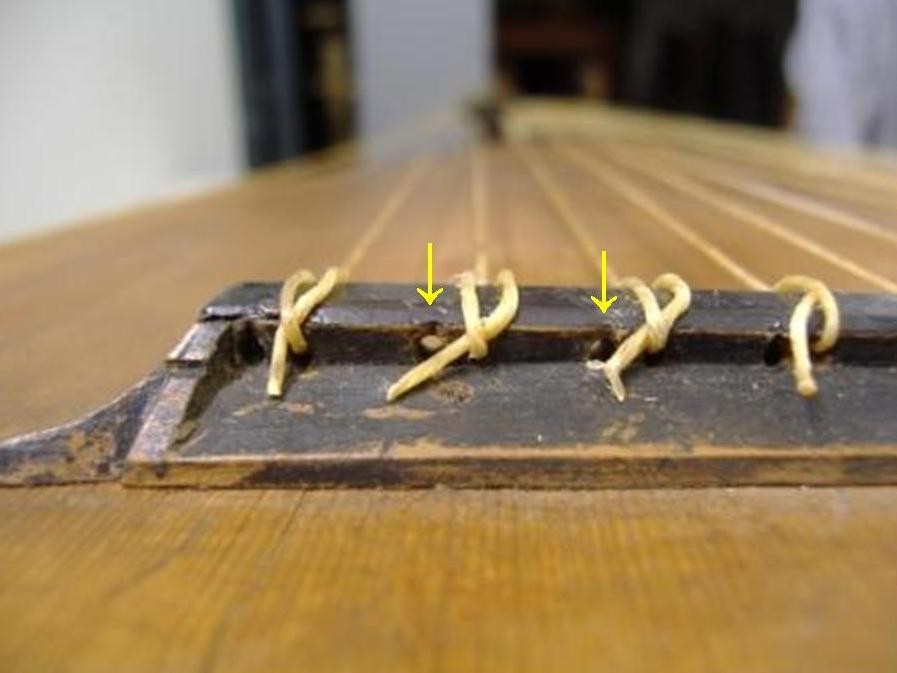
- Vertical hole oval wear on 18th-century German lute bridges: a demi-filée does not slide through the hole as a close-wound but cuts it vertically.
- Compatible diameters: for the 13th course at 3 kg, demi-filée c. 1.60 mm (vs mean bridge hole 1.80–1.90 mm).
- Octaves still present: demi-filée with twice the density of natural gut have no brightness or sustain.
- No explicit damping of bass sound requested in the tablatures.
- Iconography: “white” basses against “yellow” upper strings (J. Kupezky 1667–1740, A. Pesne c. 1740): probably silver-wound.
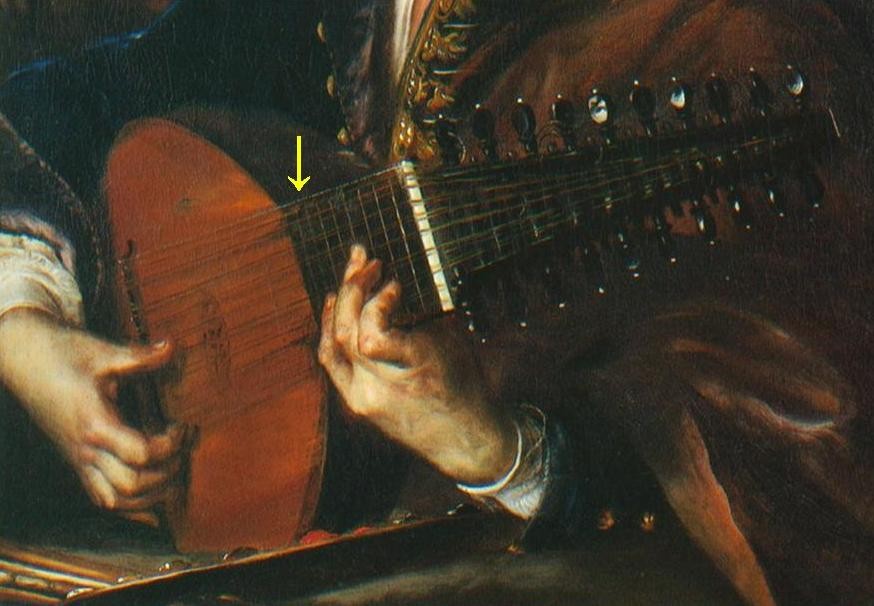
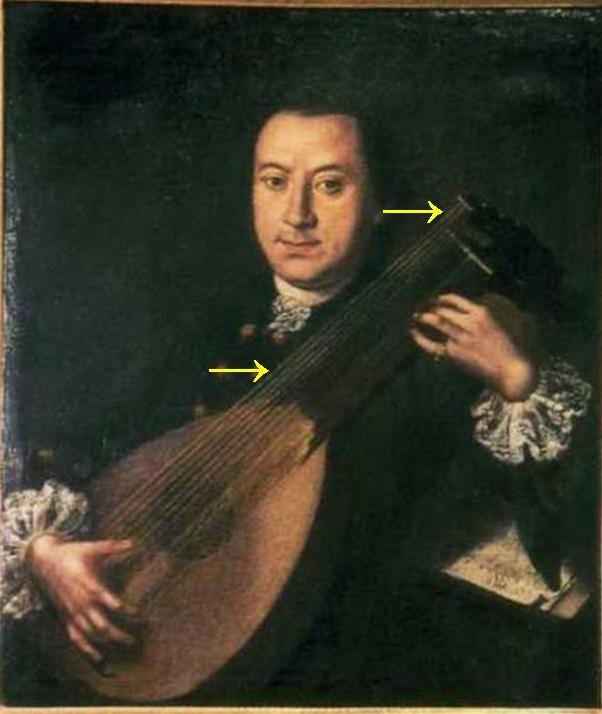
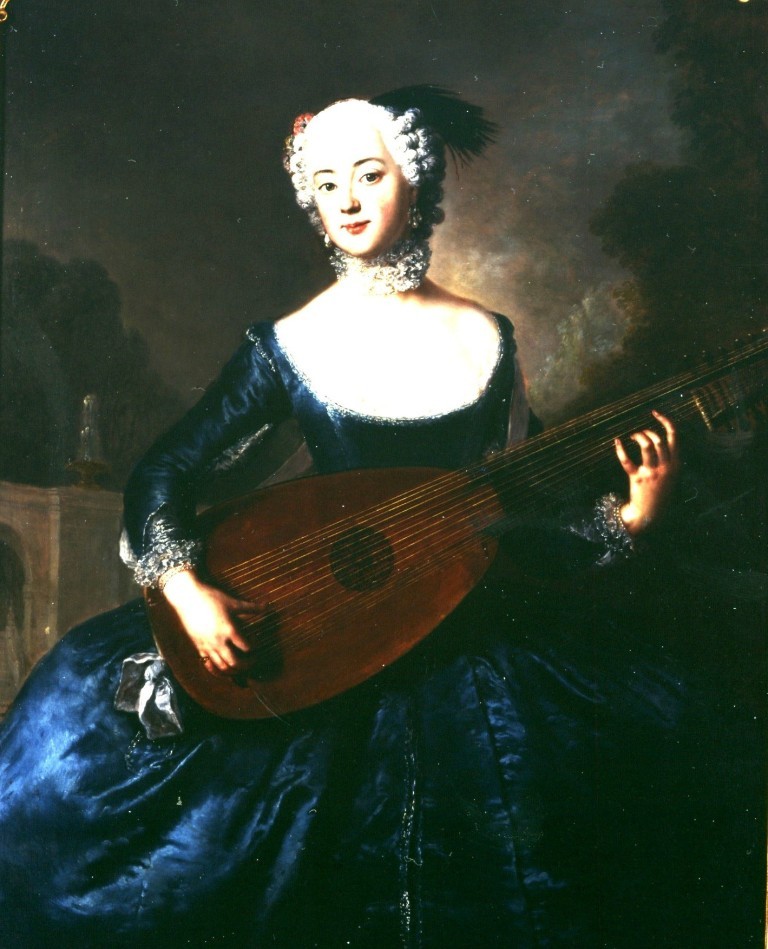
18th-century demi-filée features
- Spacing between wraps equal to wire diameter or slightly more (Le Cocq 1724).
- Core diameter equal to the octave string, wrapped with metal wire.
- Metal wire on top of the gut, never sunken into it.
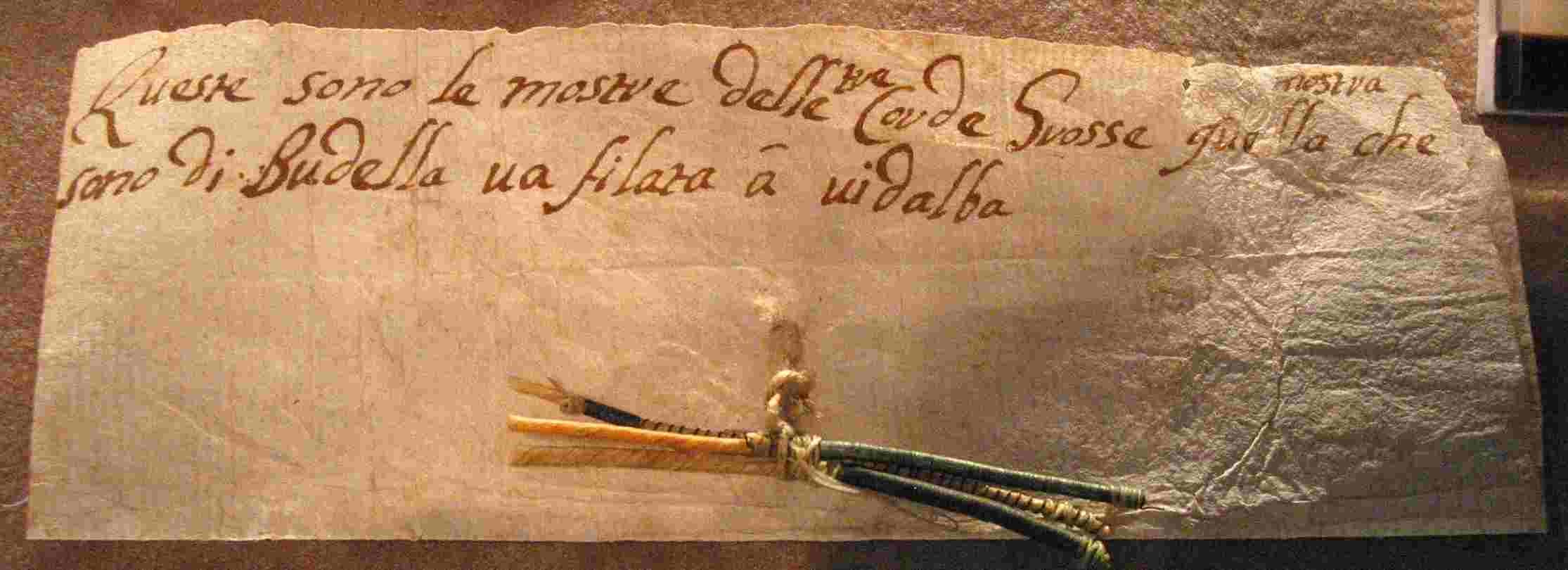
Octaves/unisons on the various lutes
Renaissance 7–10-course lutes: Bataille 1608: octaves from the 6th course. Dowland: unisons up to and including the 6th. Iconography: sometimes octave on 4th (Terbruggen 1624), sometimes unison on 4th with octaves from 5th (Manetti 1624). Barley 1596: octaves for 4th, 5th and 6th. Johnson, Cutting, Holborne: octaves not unusual.
D-minor lutes (11–13 courses, with or without extension): Perrine 1680: les 3, 4, 5 sont doublées d’unissons, et les 6, 7, 8, 9, 10 et 11 sont doublées d’octaves
. Octaves from the 6th.
Theorboes with fingered double courses: same hole diameter for bass and octave: unison.
Archlutes with long and short extension: both octaves (Van Dyck c. 1630) and later unisons (Spencer c. 1720, North-Italian school).
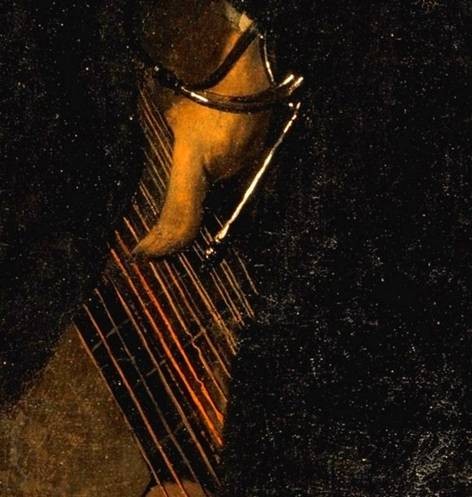
Appendix: German 13-course lutes with swan-neck extension
Vibrating length 70–73 cm with first string at “F kammerton” (Baron 1727, c. 420 Hz): first string near breaking, just as on Renaissance lutes. Why? To preserve the resonance of the 5th course (the last in plain gut): any reduction would worsen its gauge and yield. The 6th-course wound strings were already at the technological limit of available wires.
Swan-neck extensions limited to 95–100 cm: within this range the same wound strings used on the fingerboard basses can be used. A longer extension would require for the 9th course thinner wires than producible, forcing the use of plain gut and causing acoustic imbalance.
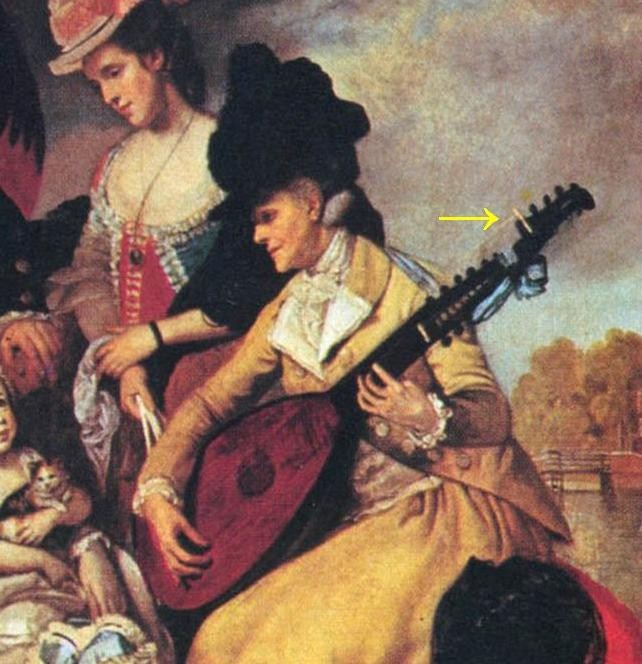
Conclusions
The most striking issue is the “missed relay” between Sorts in modern synthetic lute setups: wound strings in spaces proper to the second Sort; basses on long theorbo extensions still wound; Meanes made with the technology of Trebles (stiff). On all-gut setups one must stress the non-interchangeability of the manufacturing paths: each Sort requires a specific technology. For the stringmaker there is little manoeuvre room: producing the three Sorts is a narrow path, not a wide road. Has this not always been the fascination of the Sweet Instrument?
Live happily.
Mimmo Peruffo, 2008
© Aquila Corde Armoniche srl. All rights reserved. To request permission to reproduce this work, write to aquila@aquilacorde.com or see the terms of use for content.
References
- Daniello Bartoli, Del suono, de’ tremori armonici e dell’udito, Tinassi, Rome 1679, p. 263.
- David van Edwards, “Gut strings and Angled Bridges”, The Lute XXV, 1985.
- Vincenzo Capirola, ms., c. 1517.
- Adrian Le Roy, A briefe and plaine instruction, London 1574.
- John Dowland, in R. Dowland, Varietie of Lute Lessons, London 1610.
- The Burwell Lute Tutor, ms. c. 1670.
- Thomas Mace, Musick’s Monument, London 1676.
- Robert Donington, “James Talbot’s Manuscript”, Galpin Society Journal, 1950.
- Patrizio Barbieri, “Roman and Neapolitan gut strings, 1550–1590”, GSJ, May 2006, pp. 176–7.
- Ugolino da Orvieto, Declaratio musicae disciplinae, c. 1430–40.
- Athanasius Kircher, Musurgia Universalis, Rome 1650.
- Sebastian Virdung, Musica Getutscht, Basel 1511.
- Vincenzo Galilei, Fronimo, Florence 1568.
- Diego Pisador (1552); Miguel de Fuenllana (1554); Juan Bermudo (1555).
- Sebastián de Covarrubias, Tesoro de la lengua castellana, 1611.
- Mary Burwell Lute Tutor, c. 1670.
- Ephraim Segerman, “On Historical lute String Types and Tensions”, FoMRHI Bulletin 77, October 1994, pp. 54–7.
- Don Alessio Piemontese, I Secreti, Venice 1555.
- Don Thimoteo Rossello, Summa de’ Secreti Universali, Venice 1575.
- Giovanventura Rossetti, Plichto de l’arte de tentori, Venice 1568.
- Marin Mersenne, Harmonie Universelle, Paris 1636, Livre II, Prop. II, p. 51.
- Antonio Piccinini, Intavolatura di liuto et di chitarrone, Bologna 1623.
- Samuel Hartlib, Ephemerides, ms. 1659.
- John Playford, An Introduction to the Skill of Music, London 1664.
- Claude Perrault, Œuvres de Physique, Amsterdam 1680.
- G.B. Martini, letter from Augsburg, 1731 (cf. Barbieri 2006).
- F.A.P. de Garsault, Notionnaire, Paris 1761.
- F. Le Cocq, Recueil des pieces de guitarre, Bruxelles, Conservatoire Royal, Ms. Littera S, 1724–30.
- J. Grassineau, A Musical Dictionary, London 1740.
- E.G. Baron, Untersuchung des Instruments der Lauten, Nürnberg 1727.
- G. Bataille, Airs de différents autheurs mis en tablature de luth, Paris 1608.
- W. Barley, A New Booke of Tabliture, 1596.
- Perrine, Pieces de Luth, 1680.
- E. Durante, A. Martellotti, Un decennio di spese musicali alla corte di Ferrara, Schena 1982.
- K. Osse, “Highly strung in Markneukirchen”, The Strad, October 1993.
- A. Otterstedt, The Viol, 2002, p. 249.