Summary
In 1996 Aquila Corde Armoniche accepted a commission from the Musée de la Musique in Paris to rebuild two original sets for the Octobass built in 1850 by Jean-Baptiste Vuillaume: a four-metre-tall instrument with three plain gut strings, a 2.15 m vibrating length and a working tension of about 35 kg per string. The author tells the technical story of producing gut strings up to 8 mm in diameter — a process for which no recent precedent existed — and quantifies the effort: more than 8 km of gut strands for the two sets.
Key takeaways
- Commission from the Musée de la Musique in Paris (1996) for two copies of the original setup of Vuillaume’s 1850 Octobass.
- Three plain gut strings: C 32.70 Hz (4.0 mm diameter), G 24.50 Hz (5.3 mm), C 16.35 Hz (8.0 mm).
- 2.15 m vibrating length, about 35 kg per string, 4.5 m raw working length.
- No recent precedent existed: twisting, drying and polishing all had to be worked out from scratch for strings of unprecedented size.
- Total consumption of about 4.1 km of gut strands per set, that is 8.2 km for the two setups.
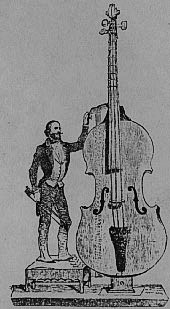
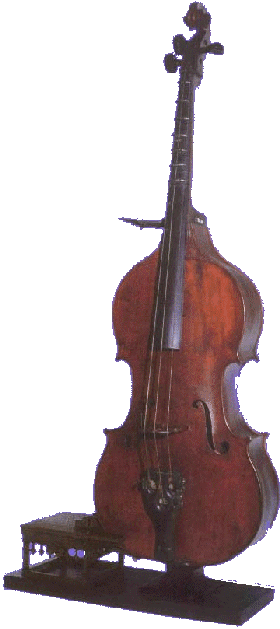
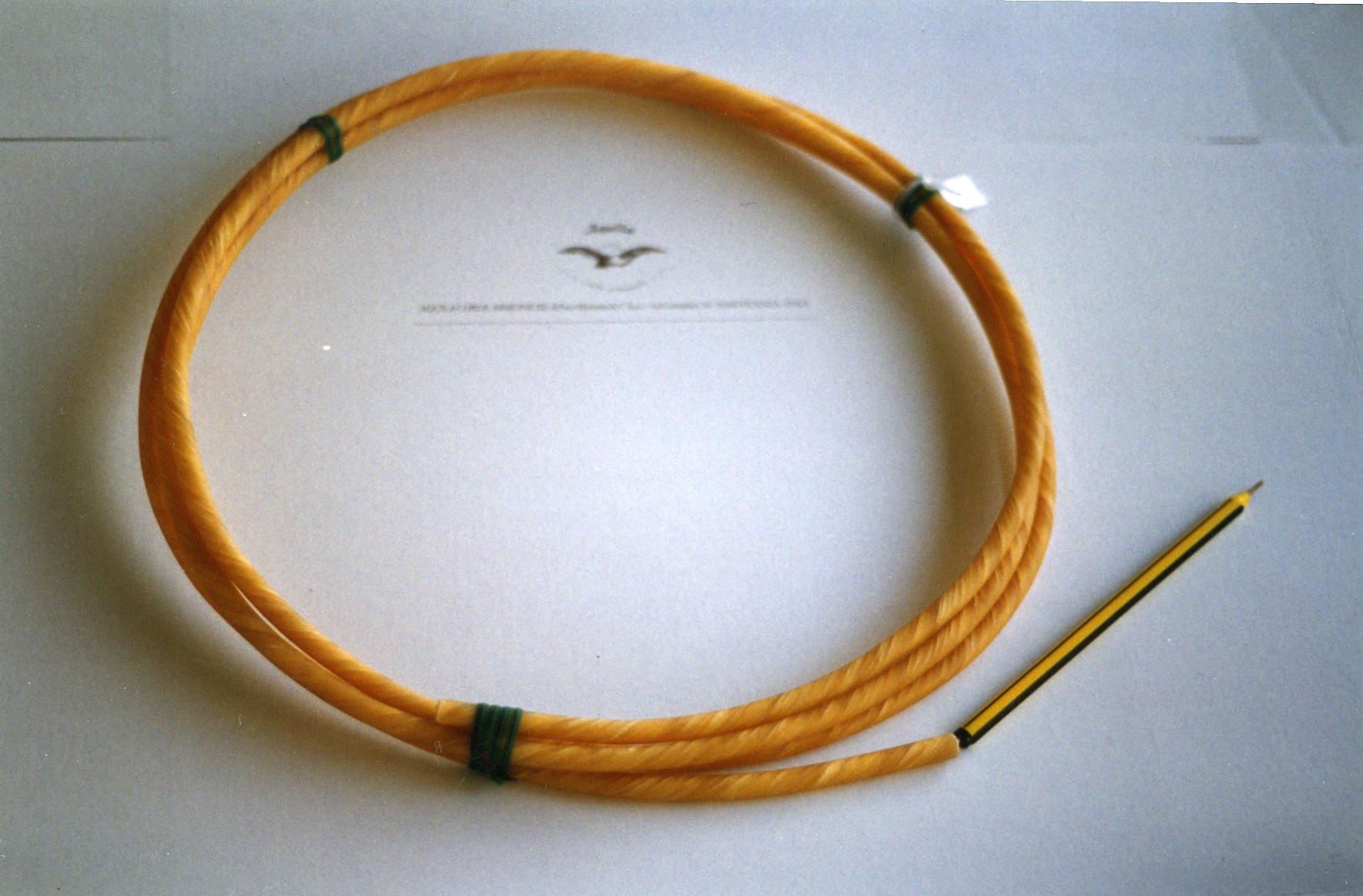
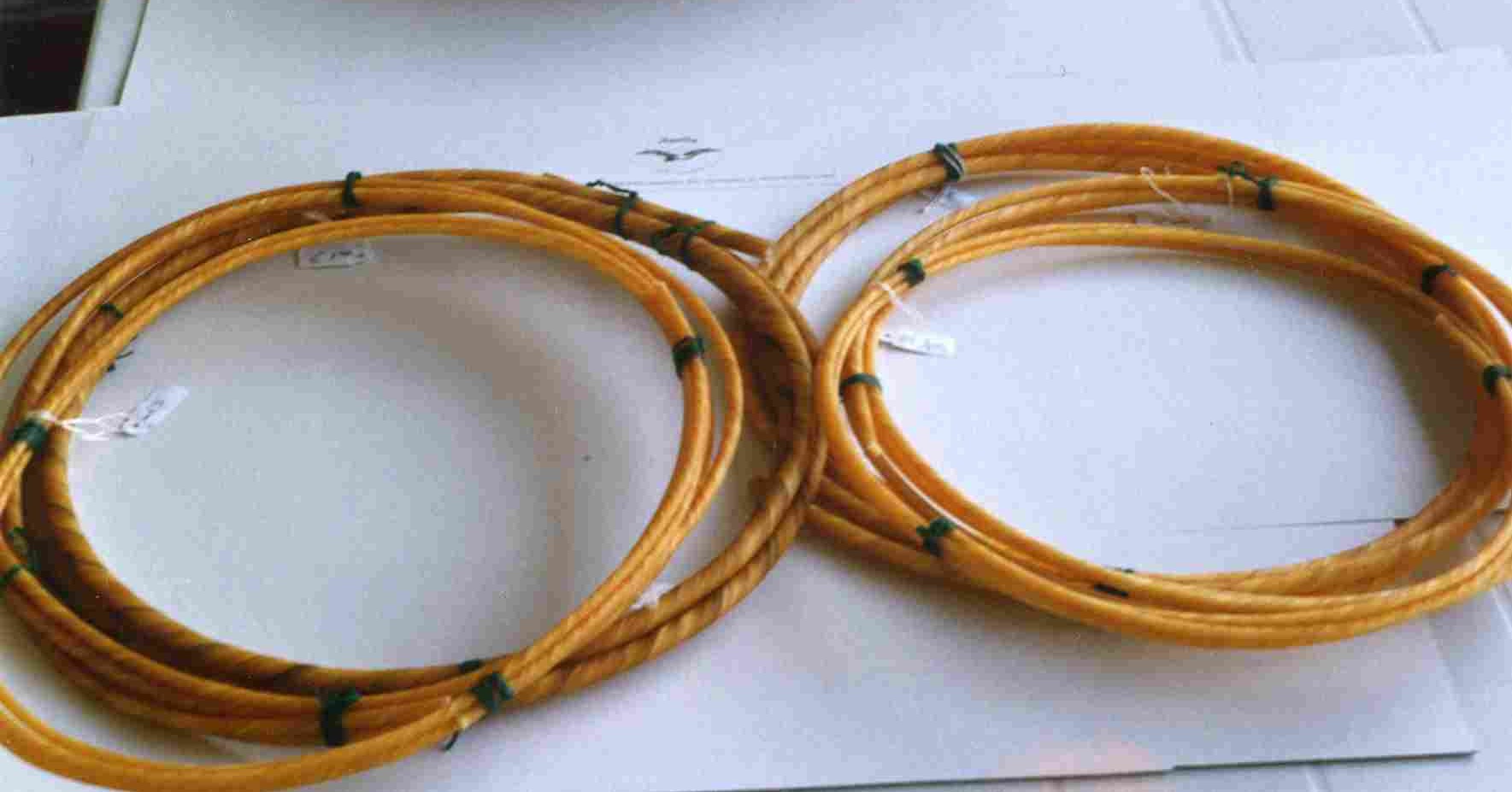
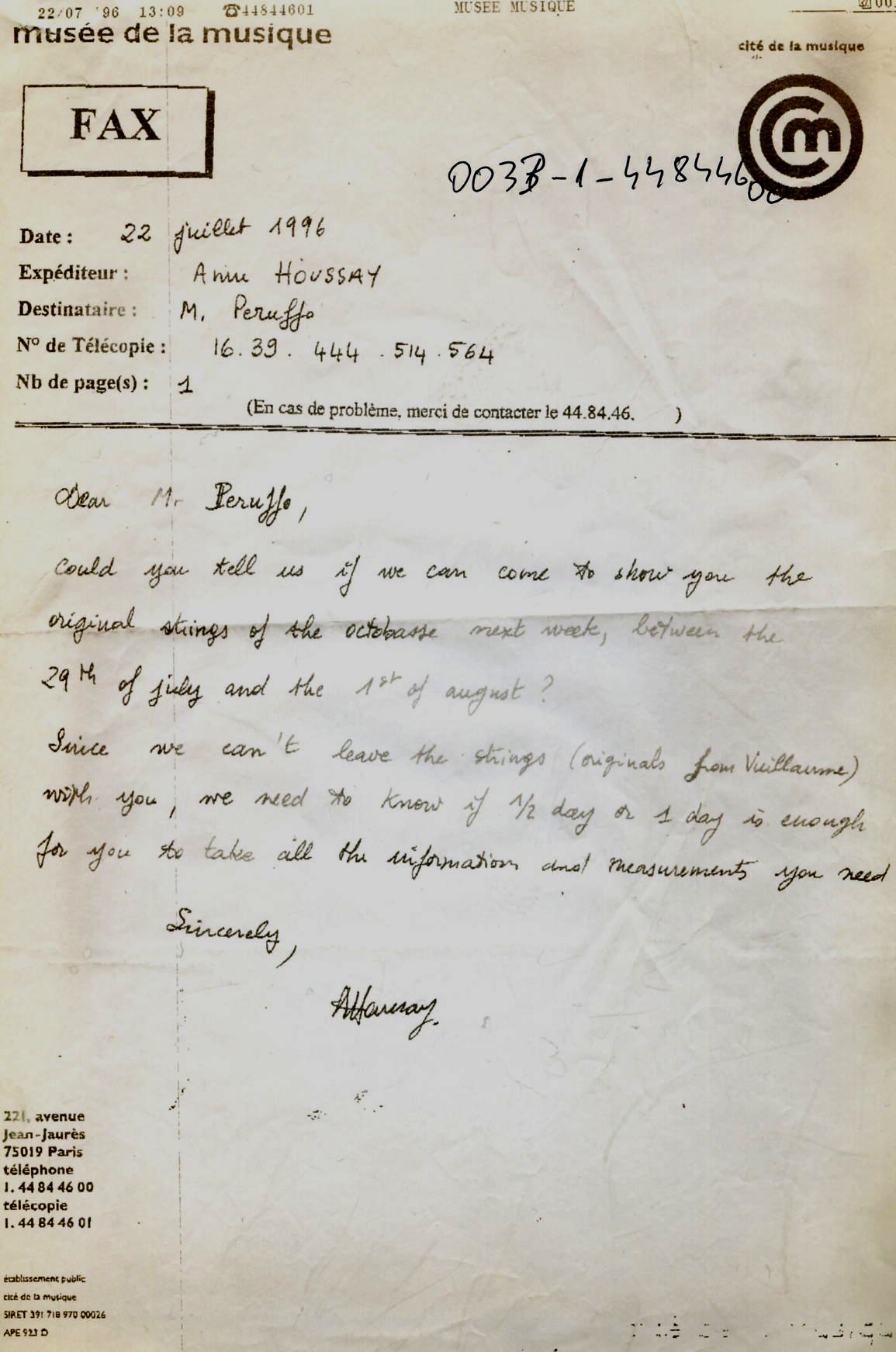
In 1996 we received a request from the Musée de la Musique in Paris to make two copies of the original setup of the Octobass built in 1850 by Jean-Baptiste Vuillaume (1798–1875).
The instrument and the original gauges
This is an unusual instrument about 4 metres tall, fitted with three plain gut strings at a vibrating length of 2.15 metres and a working tension of about 35 kg per string.
The original gauges measured (and to be built) were:
| String | Note and frequency | Diameter |
|---|---|---|
| 1st | C (32.70 Hz) | approximately 4.0 mm |
| 2nd | G (24.50 Hz) | approximately 5.3 mm |
| 3rd | C (16.35 Hz) | approximately 8.0 mm |
The difficulties of making them
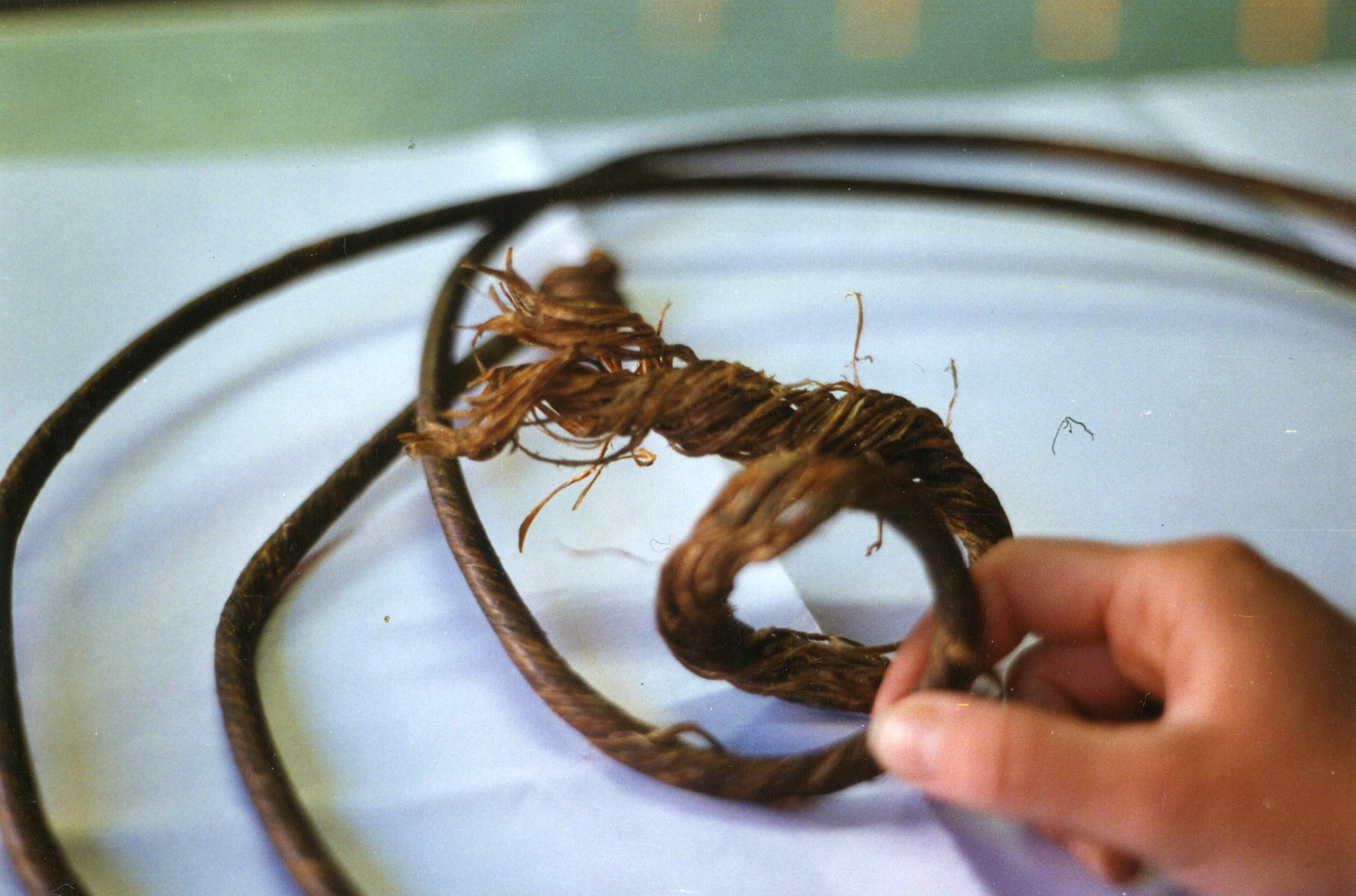
The task soon proved rather difficult, given the complete lack of previous experience in making plain gut strings of that size. The problems concerned not only the right number of gut strands to be combined (to reach the required diameters) but also how to twist such large strings, the procedure for their slow drying and finally how to carry out the final polishing.
The strings were eventually made at a rough length of 4.5 metres, requiring approximately 4,100 metres (4.1 km) of gut strands per set — that is, 8.2 km of gut for the two sets ordered.
Want to see our strings mounted on the instrument?
Mimmo Peruffo, 2006
Gallery
 |
 |
 |
 |
 |
 |