Summary
Essay on historical wound strings for bowed instruments. The author reconstructs the earliest known references (Goretsky 1659, Playford 1664) and the slow European diffusion up to 1685–87 (Gabbiani), distinguishes the three historical types — close wound, double wound and demi-filée — with their respective organological applications, and describes the construction features that Aquila Corde Armoniche adopts in philological reconstruction: round wire, high-twist gut core, no silk underlay, historical metals (silver, copper, brass) and core/wire proportions consistent with 18th-century sources.
Key takeaways
- Earliest known wound-string references: 1659 (Hartlib/Boyle on Goretsky) and 1664 (Playford); actual diffusion only after 1680.
- Three historical types: close wound (adjoining wraps), double wound (two layers) and 18th-century demi-filée (spaced wraps).
- The demi-filée appeared for technological reasons: wires fine enough for light close wound were not yet available.
- Historical wound strings use round wire (silver, silvered copper, brass), a high-twist gut core and no silk underlay.
- Modern wound strings with flat wire, stiff core and tungsten or nickel coatings differ from historical practice in timbre and dynamics.
A few historical notes
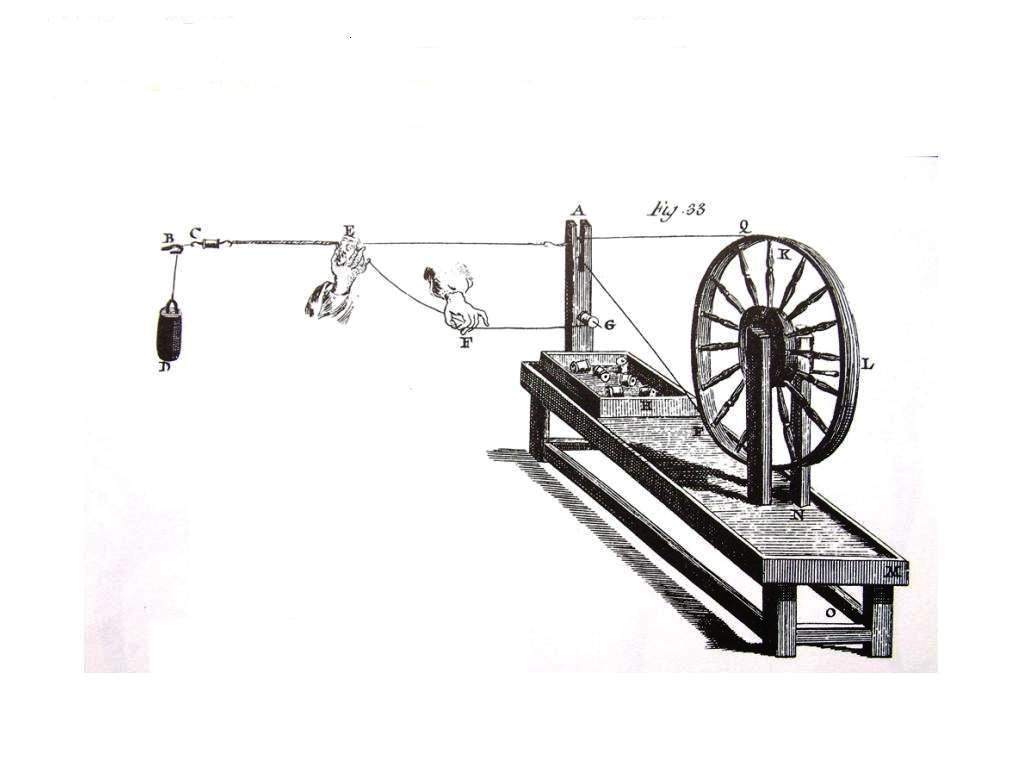
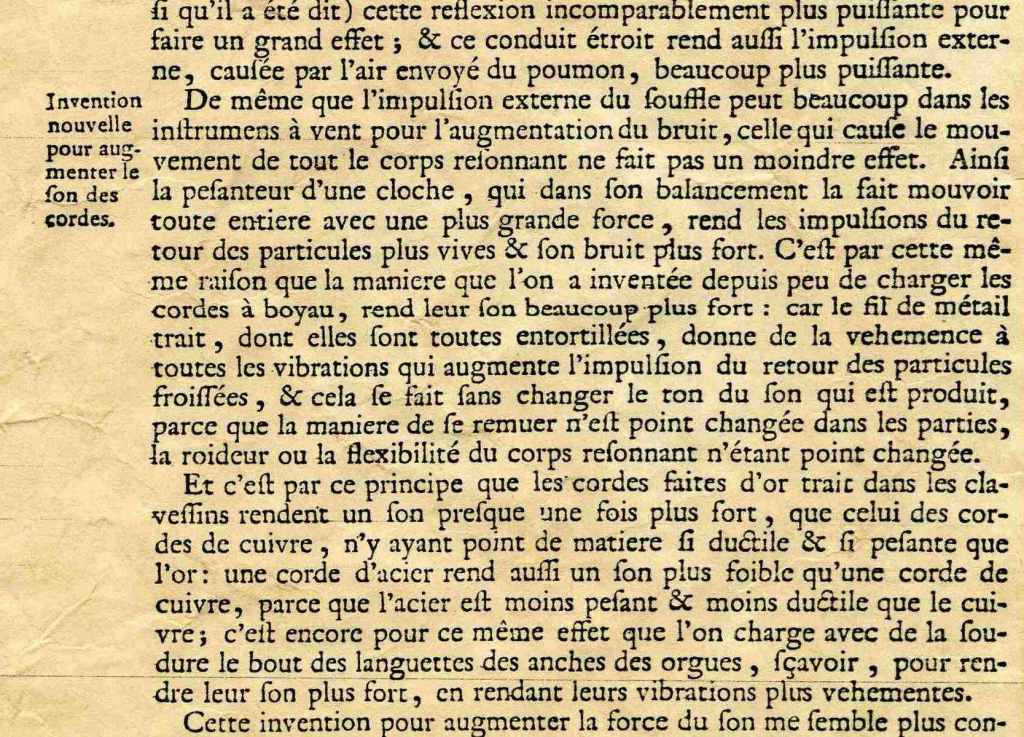
The earliest mentions known to us of wound strings date back to 1659 (Hartlib Papers; Ephemerides: “Goretsky hath an invention of lute strings covered with silver wyer, or strings which make a most admirable musick. Mr Boyle… String of guts done about with silver wyer makes a very sweet musick, being of Goretsky’s invention”) and 1664 (John Playford, An Introduction to the Skill of Musik).
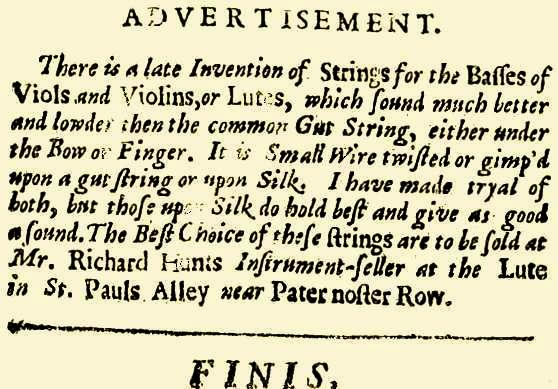
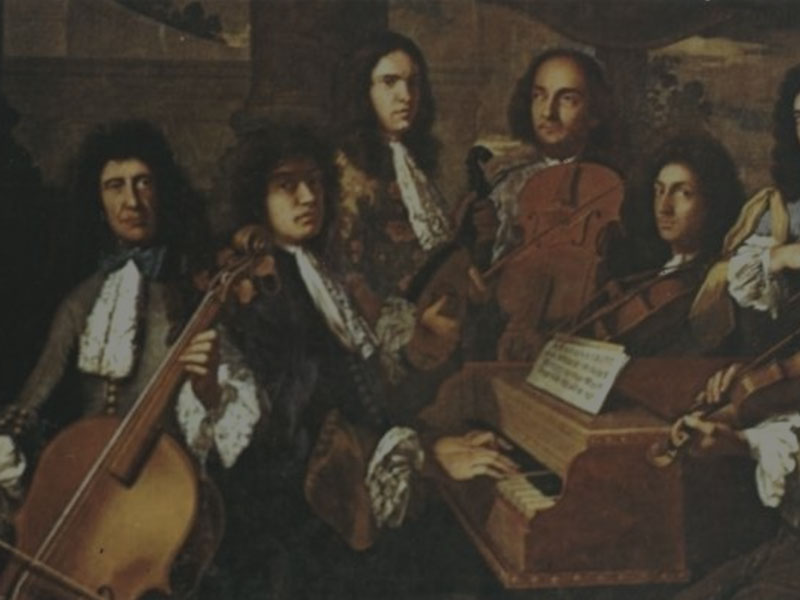
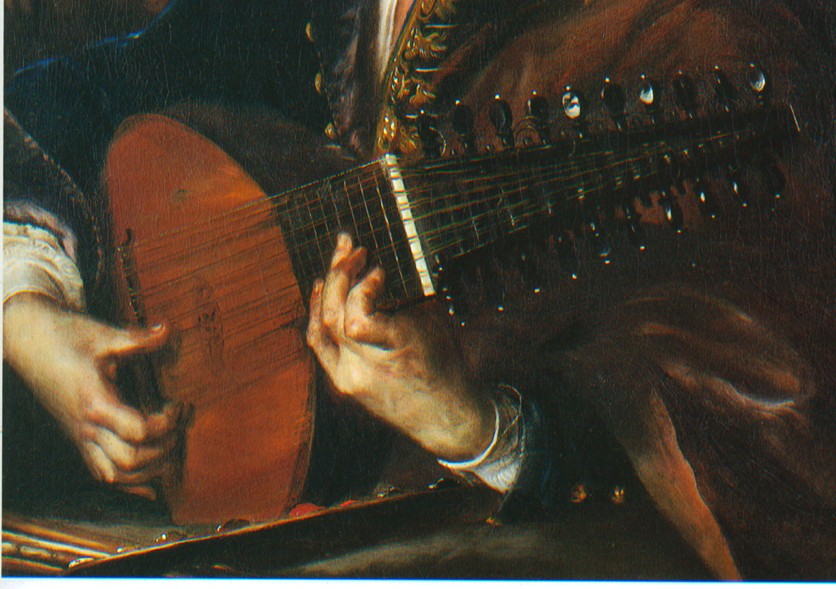
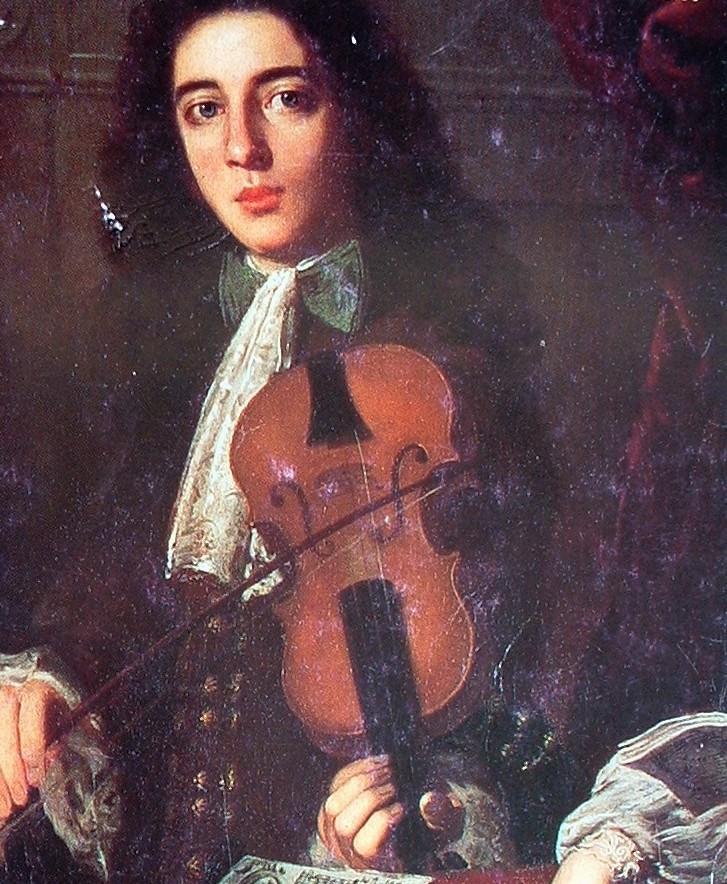
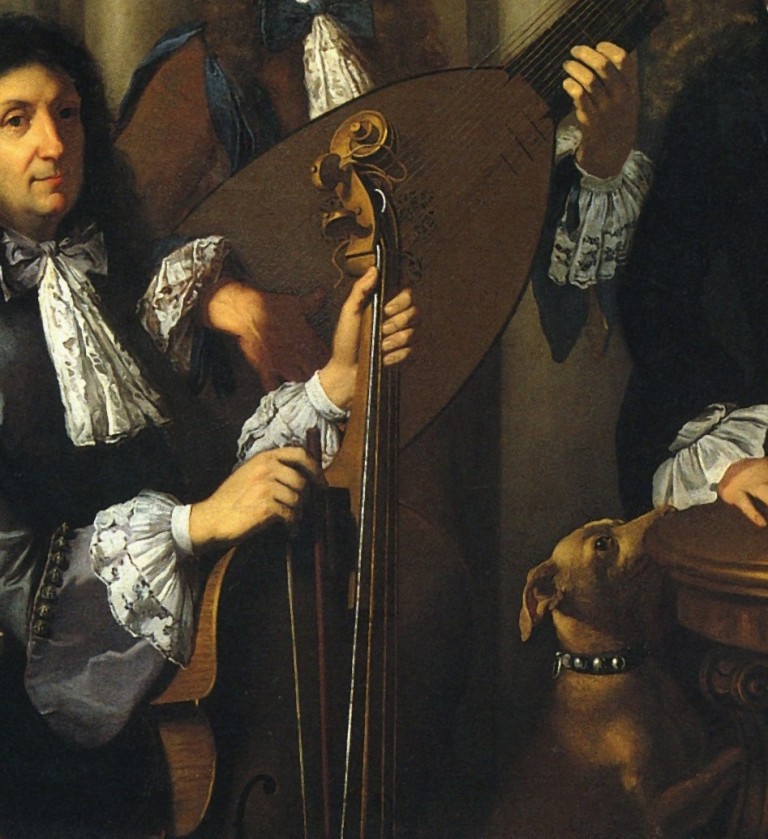
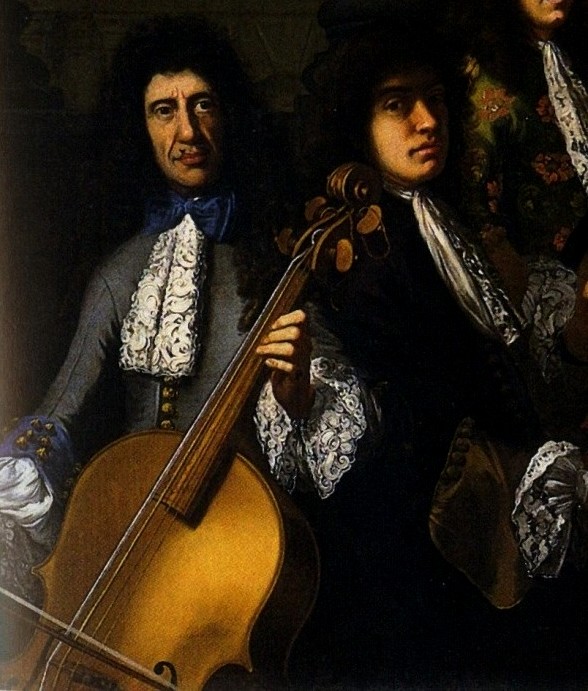
Their use did not spread out quickly for some decades: the earliest iconographical evidence showing instruments (violin and cello) strung with wound strings dates back to the 1680s. In Italy, a country renowned for its string production, the earliest evidence is from 1677.
According to Rousseau (Traité de la Viole, 1685), it was the viola da gamba player Sainte Colombe who first introduced them into France around 1675; but the most important late-17th-century English lute and viol tutor, Thomas Mace’s Musick’s Monument (1676), does not mention them at all. James Talbot’s MS (c. 1700) still lists Lyons, Catlines or “deep dark red” Pistoys as basses for lute, violin and bass-violin. Only in the early decades of the 18th century did wound strings, both close and open wound (called in France demi-filée), get the upper hand over traditional gut basses.
Which wound strings were in use in the late 17th to 19th centuries?
Just three:
- Close wound: single wire spires tightly wound touching one another. The still commonly used sort.
- Double wound: a second close-wound layer is laid over the first. Because of the large amount of metal these were used on instruments with a short string length but requiring a low tuning (violoncello da spalla, 5th double bass string, etc.).
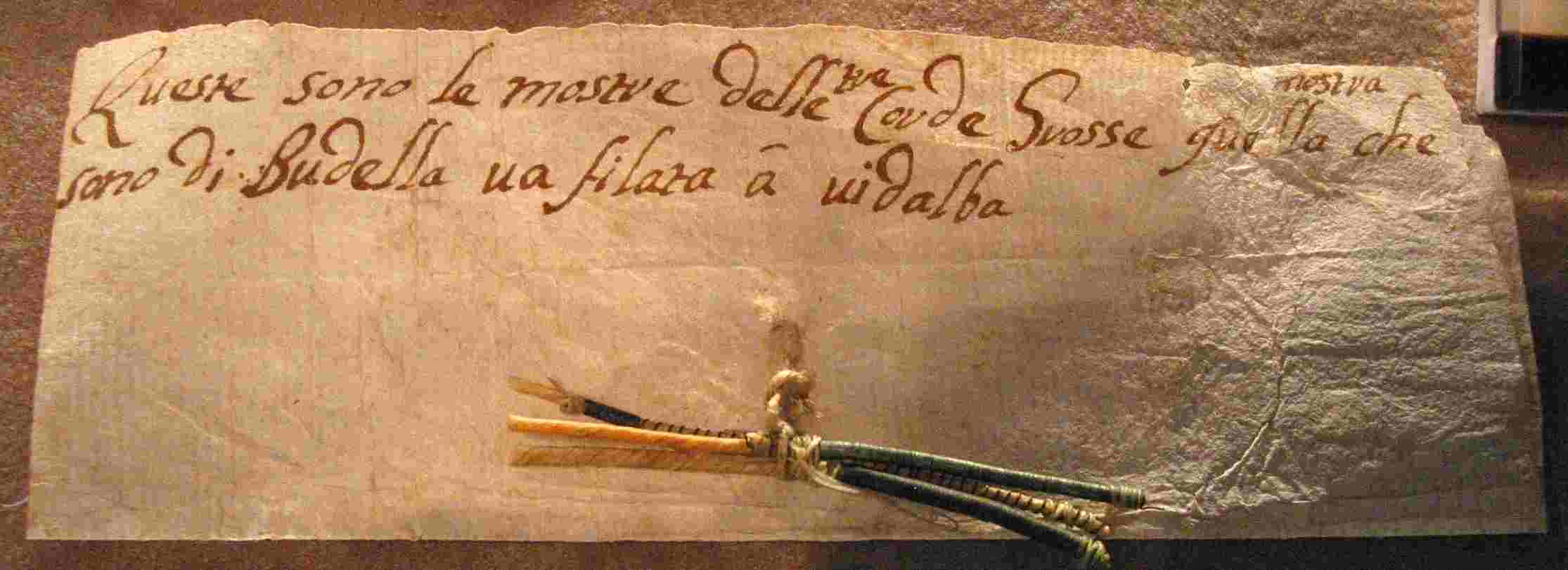
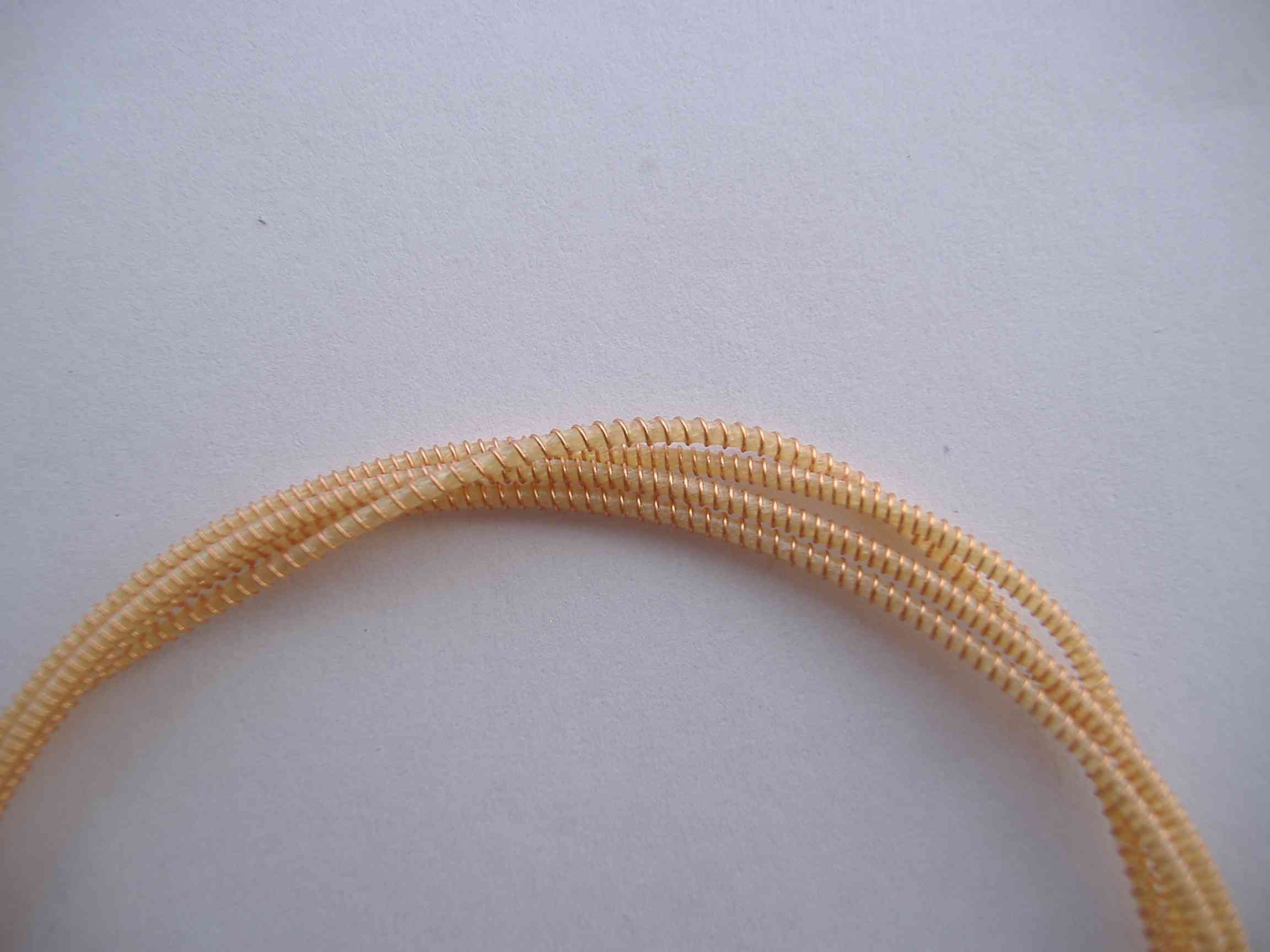
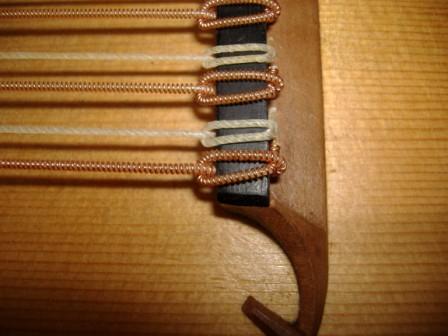
- Open wound (demi-filée): the single wire is wound so that the spires do not touch but with a space equal to or slightly wider than the wire diameter (François Le Cocq, Paris 1724). Used exclusively in the 18th century as a transition between plain-gut mid-register and close-wound basses (bass viol 4th, violin 3rd, D-minor German baroque lutes).
|
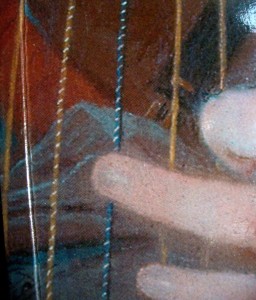 |
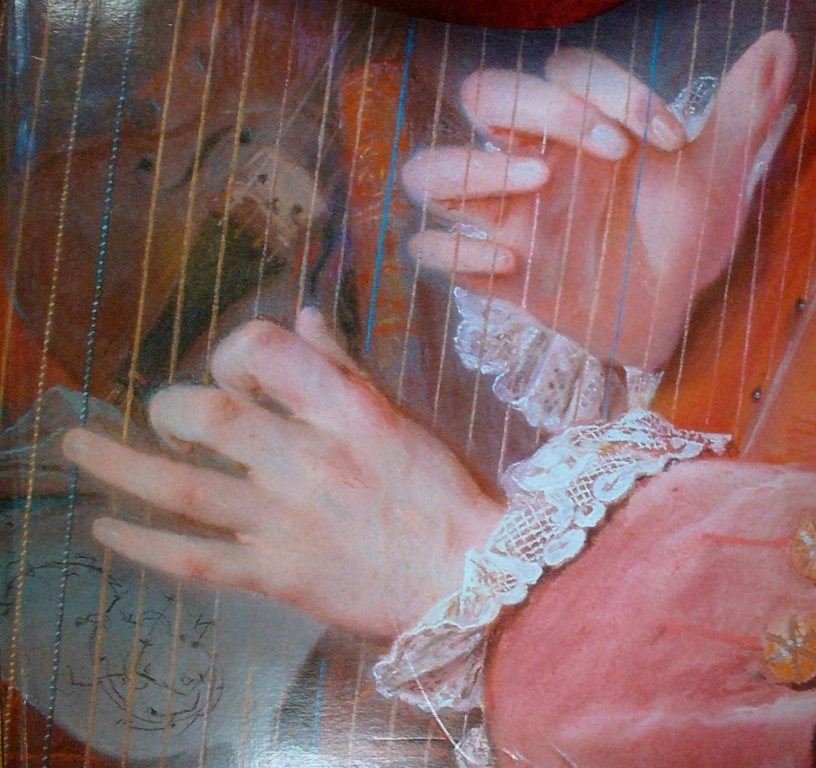
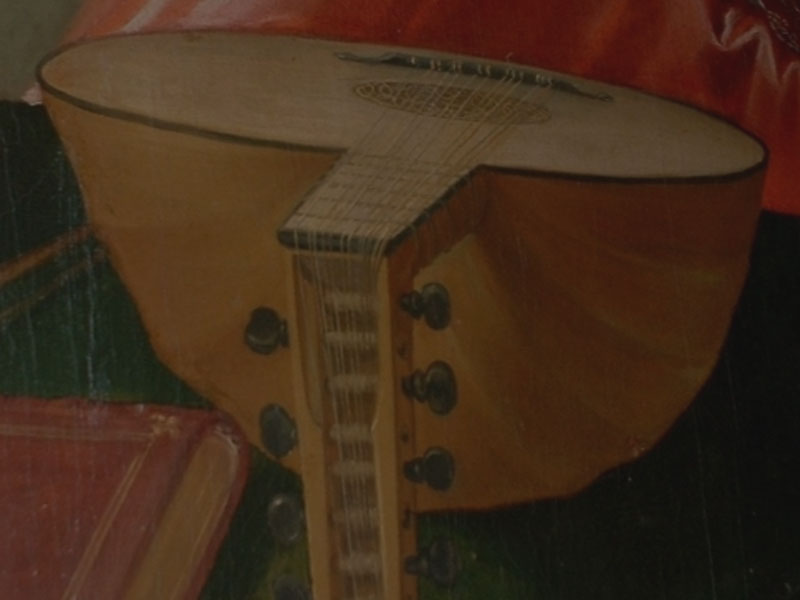
18th-century harp with open-wound basses. Note the violin underneath: 4th silver wound and three upper gut strings.
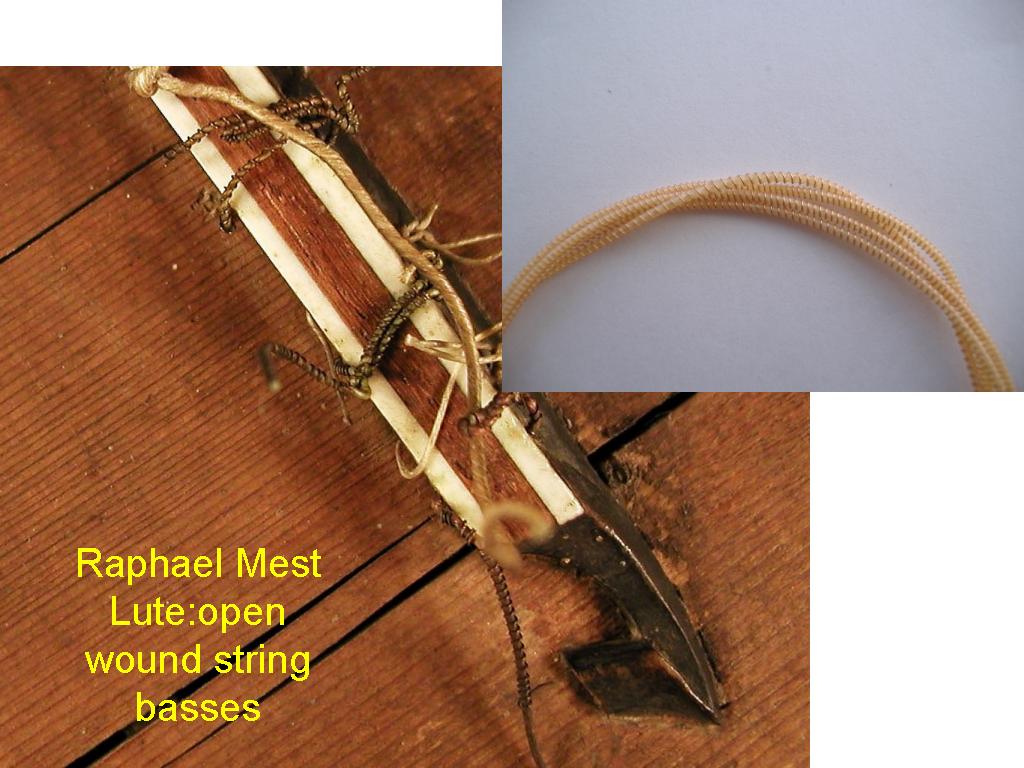
Listen to the sound of demi-filée basses on a 13-course lute in D minor:
Technological differences between modern and historical wound strings
Historical wound strings
- Medium- or high-twist gut core.
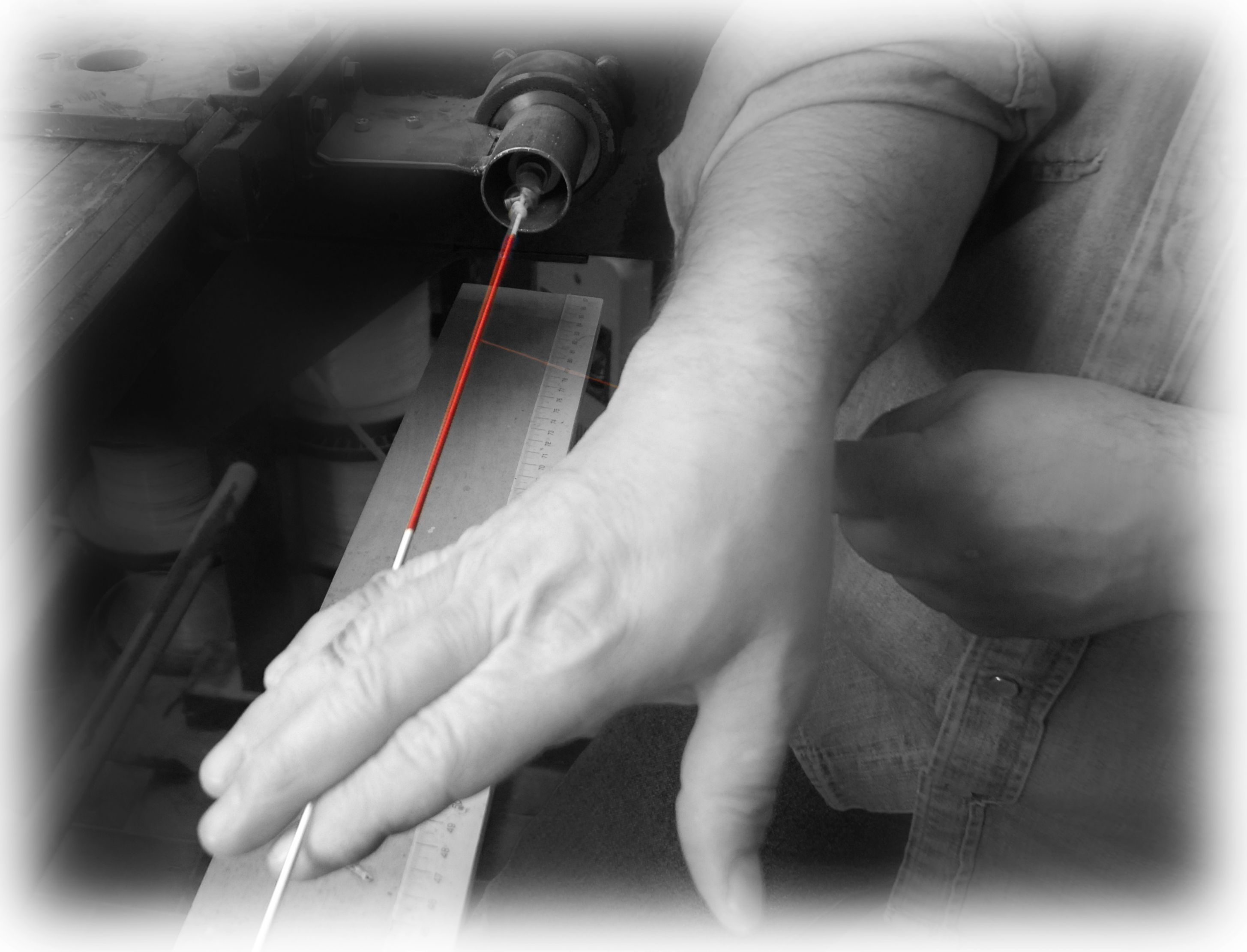
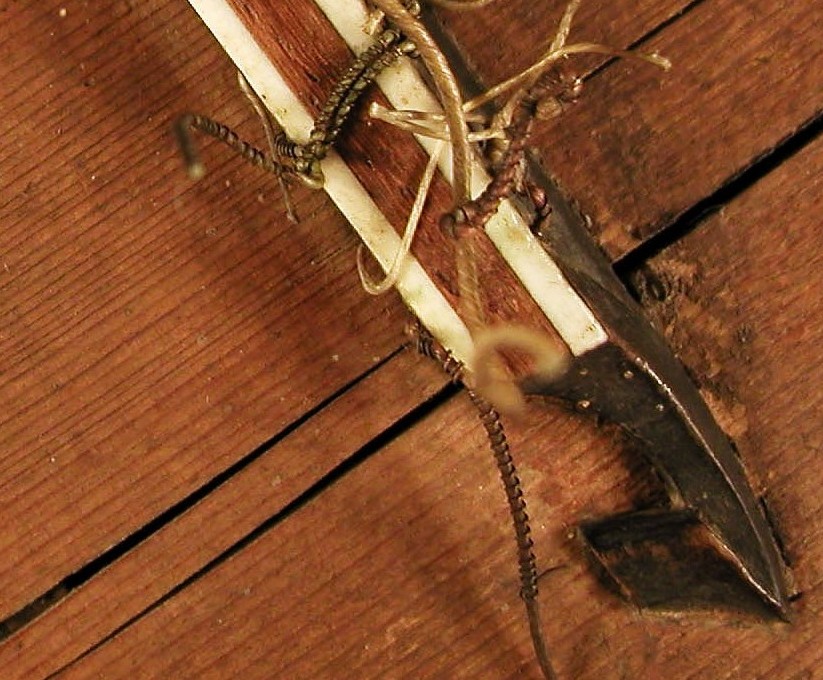
- Round metal-wire winding.
- No silk padding between core and metal winding.
- Silver, silvered copper, pure copper or brass wire.
- Gut/wire ratio different from modern wound strings.
Modern wound strings
- Flat-wire winding.
- Stiff, low-twist core.
- Silk padding between core and metal winding.
- Modern alloys such as tungsten, nickel etc.
- Metal-biased gut/wire ratio.
Hence the acoustical differences are quite noticeable and concern both dynamic and timbral aspects.
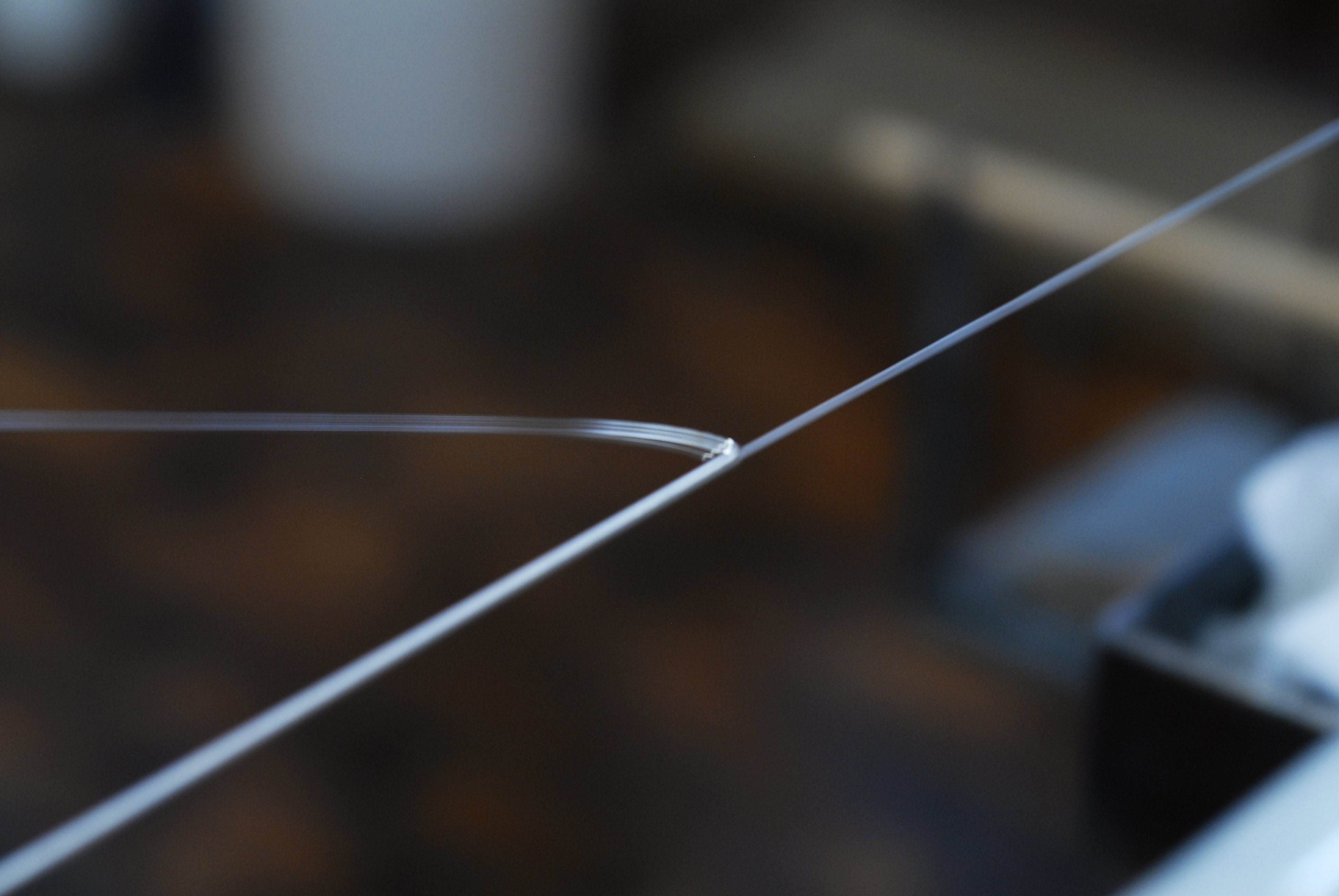
Photo gallery
 |
 |
 |
 |
 |
 |
 |
 |
 |
 |
 |
 |
 |
 |
 |
 |
 |
 |
 |
 |