Summary
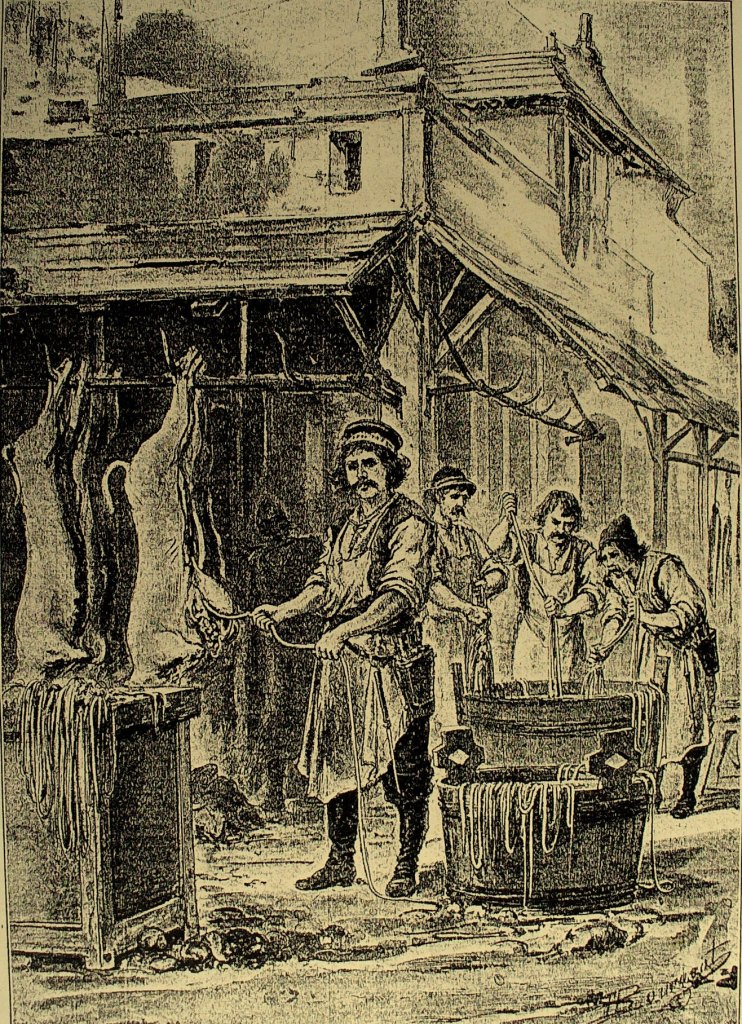
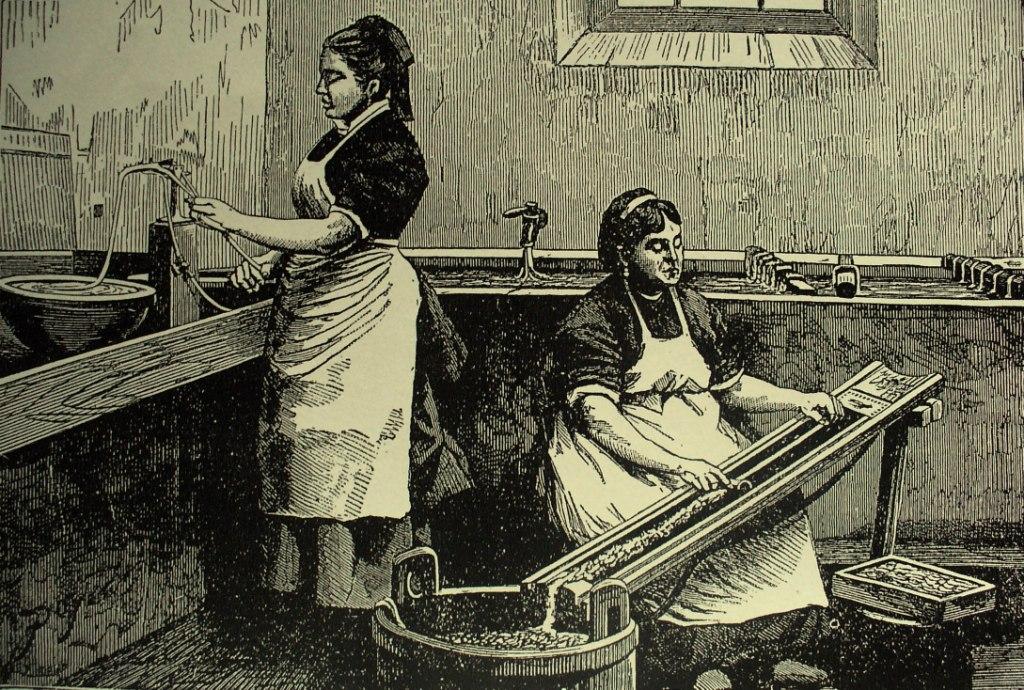
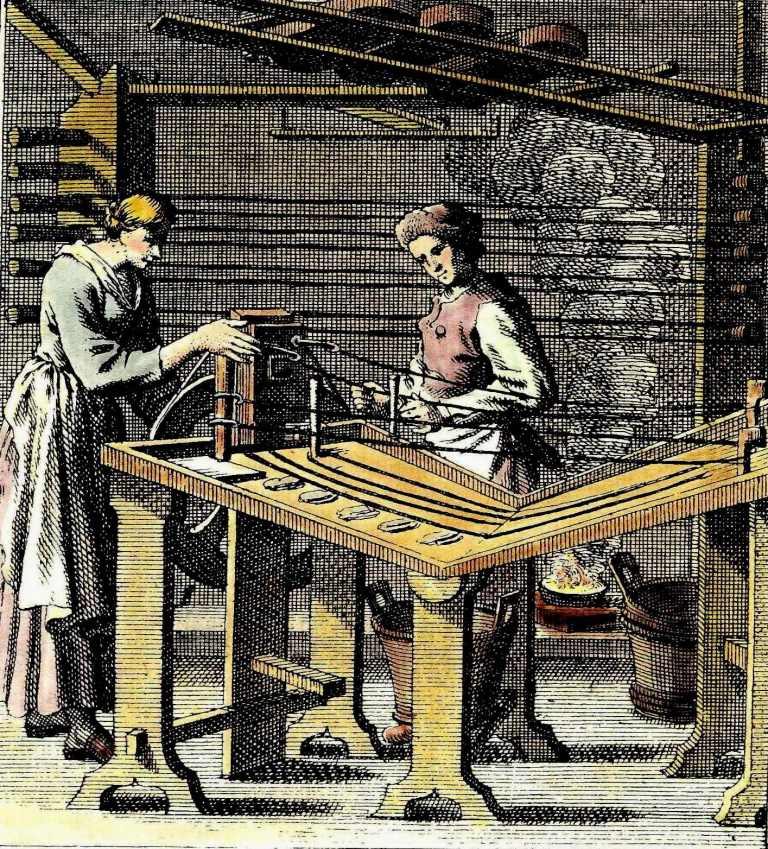
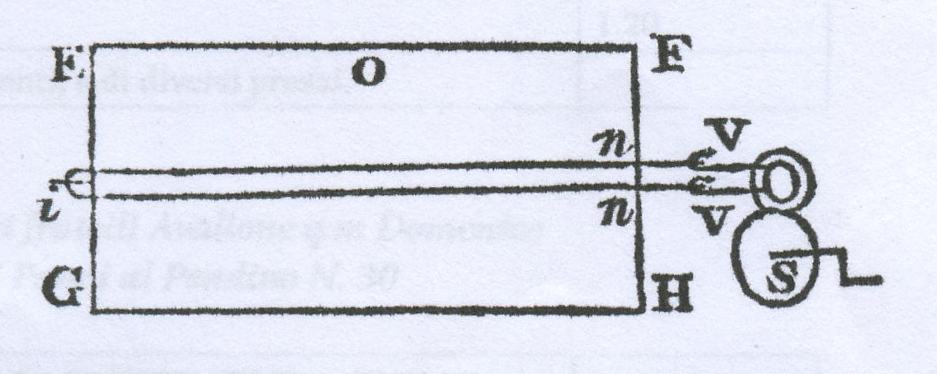
Gallery of key iconographic sources for the history of gut stringmaking. It collects the famous Christoph Weigel print Der Saitenmacher (Regensburg 1698), the drawing of the Paduan stringmaker’s frame described by the English traveller Philip Skippon (second half of the 17th century), the plates from Diderot and D’Alembert’s Encyclopédie (Paris 1750–67) and two late-19th-century images kindly provided by Frank Smith (UK).
Key takeaways
- Christoph Weigel’s Der Saitenmacher (1698) is the best-known engraving of a Baroque stringmaking workshop.
- The Paduan stringmaker’s frame was described by the English traveller Philip Skippon in the second half of the 17th century.
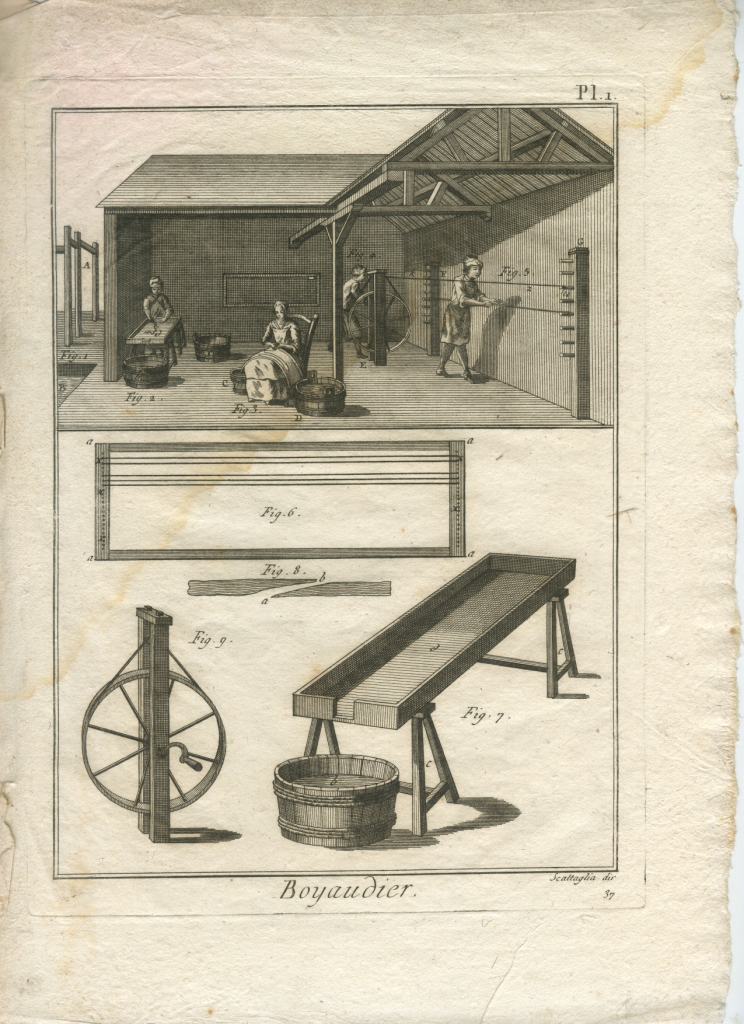
- Diderot and D’Alembert’s Encyclopédie documents mid-18th-century French stringmaking.
- The 19th-century plates supplied by Frank Smith show the technological continuity up to the late 19th century.
The seventeenth century: Weigel’s workshop and Skippon’s Paduan frame
|
Christoph Weigel: “Der Saitenmacher”, Regensburg 1698 |
Skippon’s description of the string frame of a Paduan stringmaker (second half of the 17th C.) |
The eighteenth century: the plates of the Encyclopédie
|
Diderot & D’Alembert, Encyclopédie, Paris 1750–67 |
The nineteenth century: gut stringmaking at the end of the century
|
19th C. stringmaking (courtesy of Frank Smith, UK) |
19th C. stringmaking (courtesy of Frank Smith, UK) |